Device to Device Communication in 5G

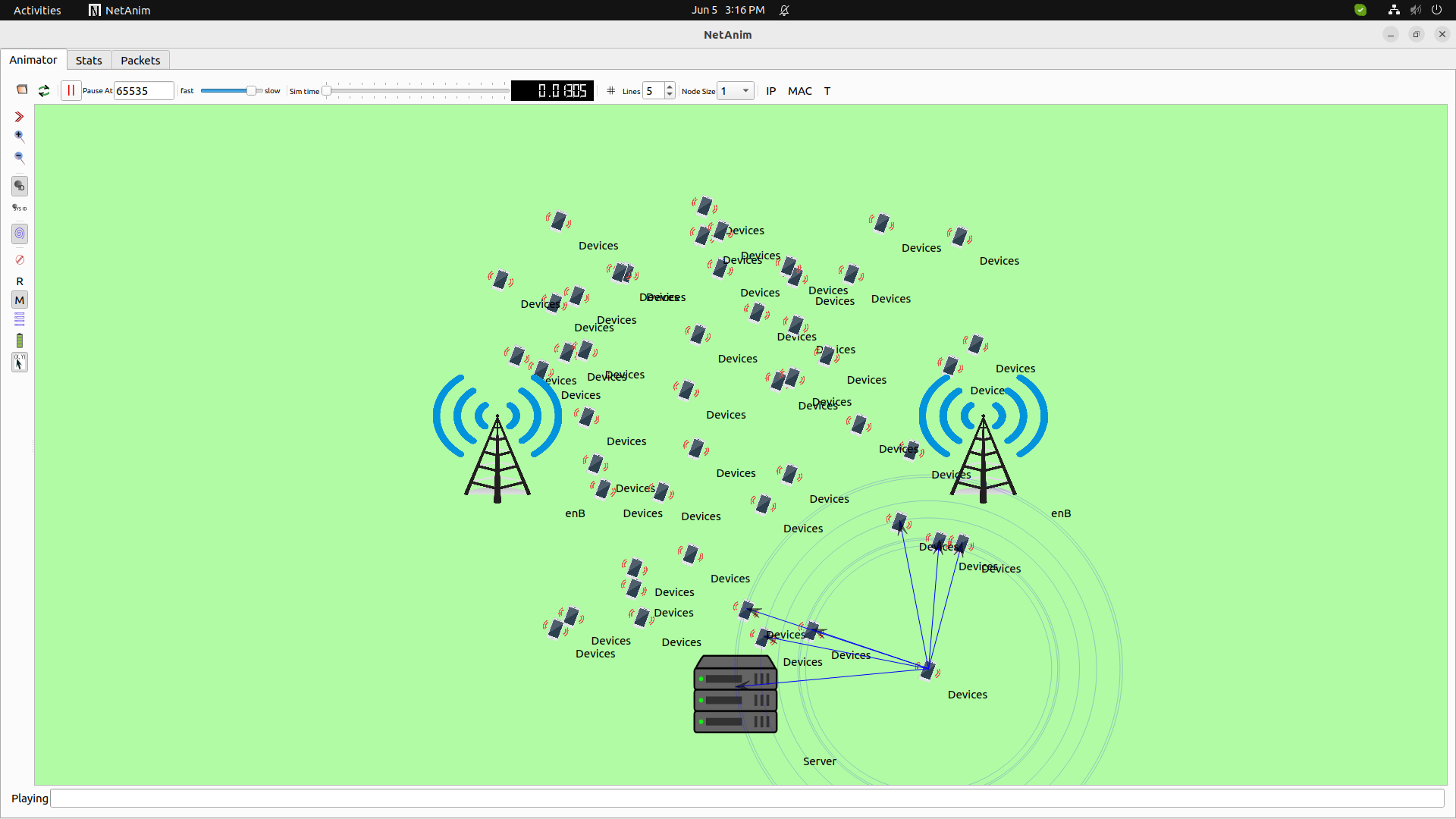
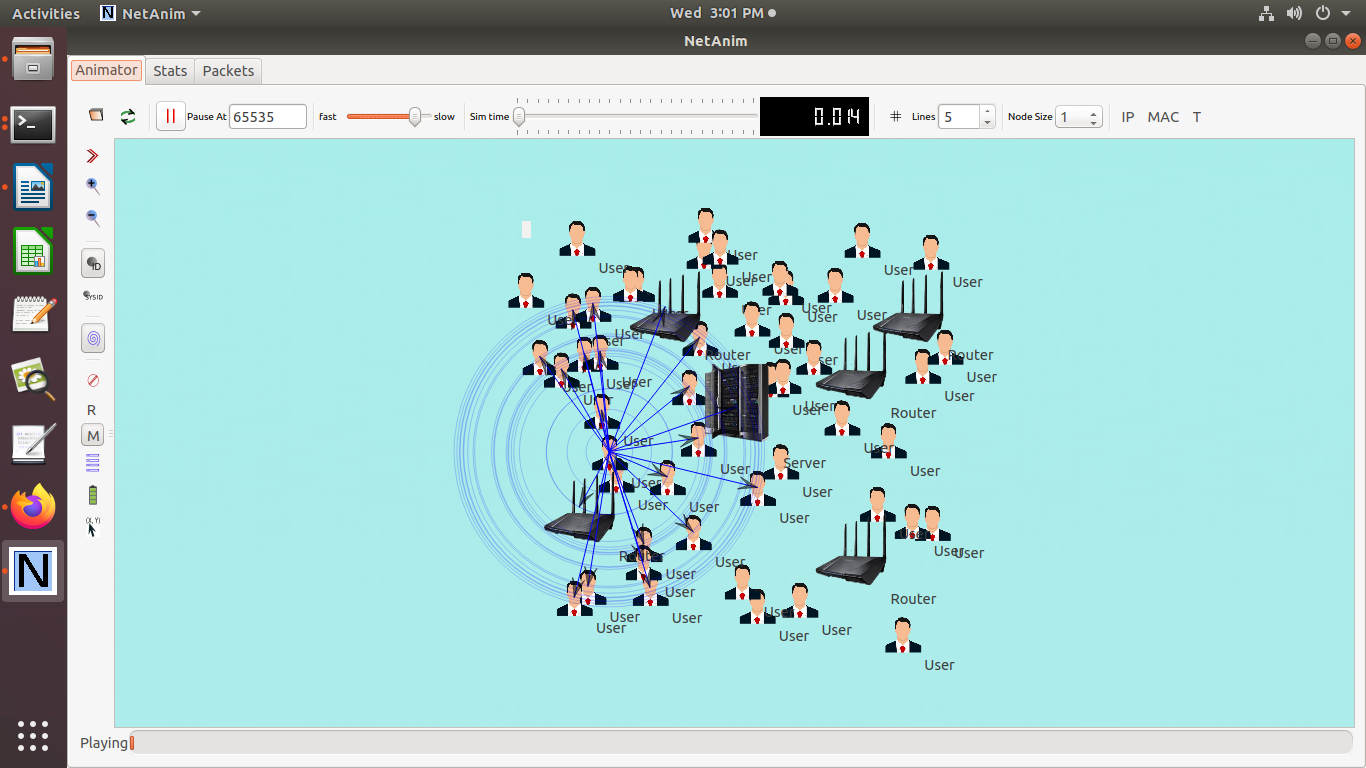
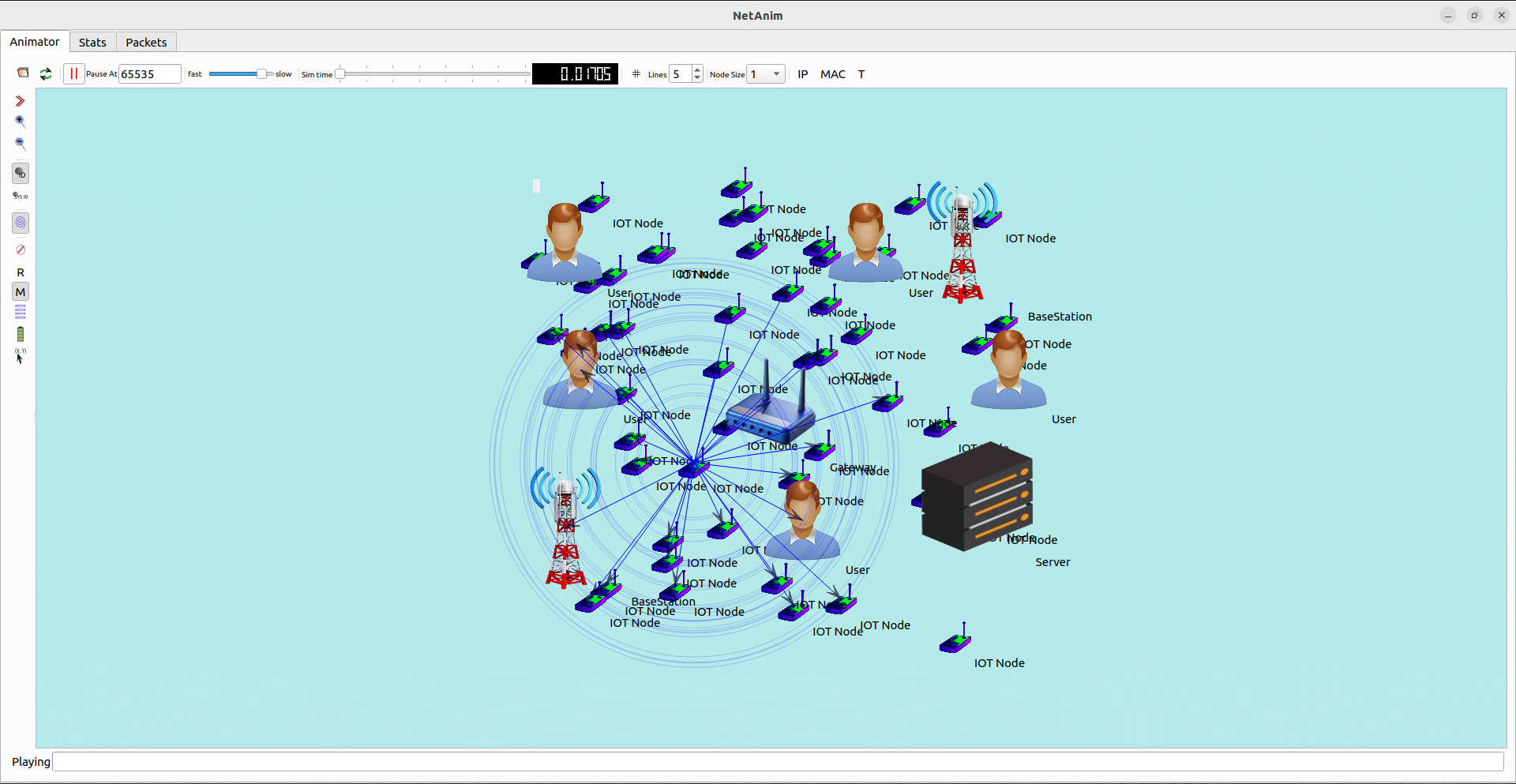
Device-to-Device (D2D) Communication is the method of creating direct interaction between the 5G enabled devices. In a 5G mobile network, the deployed devices are coupled together through dedicated connections for fast data sharing from one device to another. 

From this page, you can procure awareness on recent research challenges of Device to Device communication in 5G network field!!!

Due to the reliability of D2D communication, it is transformed into an encouraging technique in current evolving mobile network technologies (i.e., 5G). As a matter of fact, the direct mobile devices will establish the interaction without the use of base stations (BS) / key network components. In specific, the data will not be transmitted through the access points in fixed infrastructure. Further, we have given you the two primary classifications of D2D communication: out-band and in-band as follows,
Device to Device Communication in 5G Technology

D2D Communication Types

  • Outband D2D
    • Autonomous and Controlled
  • Inband D2D
    • Overlays and Underlay

We believe that you are clear about what exactly D2D communication in cellular technologies. We can now see the important points that you need to focus on while beginning the D2D Communication 5G projects. Our resource team has collected up-to-date information on the following to fulfil your needs.

  • Newly Emerged Models, Technologies and Frameworks
  • Current and Advanced Research Areas in D2D Networks
  • Different Implementation Scenarios and Respective Results

What is D2D communication in 5G?

From the name Direct D2D networks itself; we can understand that the users/devices are directly communicated. In this, it eliminated the traffic because of their infrastructure-less environment and turned out to be the key factor in increasing the efficiency of the system performance and supporting future enabling cellular technologies.   Beyond this, we have more important research areas of Device to Device Communication in 5G.   

What does the D2D features used in 5G?

Usually, D2D communication Projects doesn’t matter the employment of infrastructure / infrastructure-less environs. It mainly focuses on deploying large-scale devices with low latency and high data rate features. Further, it is also capable of coping with 5G network technical issues in industrial sectors. 

D2D Intensive Communication?

And, this device-intensive communication is configured by the nearby devices themselves to form the network. Moreover, it becomes the kernel of the current cellular network in order to improve the below characteristics.  

  • High throughput
  • High spectral efficiency
  • Low delay
  • Improved system volume

Next, we can see the reasons behind the 5G integration in D2D communication. Basically, 5G has many advantages in terms of high throughput, low delay, and high data rate. Similarly, D2D has the special feature of direct device communication without a base station. When these technologies are combined together, it will improve cellular communication by means of resource efficiency, controlled network, reliability, scalability, and more.

Why 5G in D2D Communication?

  • Enhanced Performance
    • Energy efficient
    • Minimum end-to-end latency
    • Maximum bit rate
  • Standardization and Management
    • Under TSD and 3GPP
  • Scalability and Trustworthiness
    • Assured Safety
    • Services by Operator
  • Efficient Resource Control
    • Load balancing
    • Close-fitting spectrum utilization

How does 5G works in D2D communication?

In the forthcoming 5G system, direct D2D interaction is recognized as network-controlled technology to succeed in limited distance communication (i.e., short distance). Here, it stably balances the local traffic from global traffic. Through this, it will manage the central network traffic and eliminate the heavy data load problem and core network.

In recent times, D2D is fully associated with the 5G cellular technologies for providing better network performance for many real-time applications. For instance: live video broadcasting. Since it uses D2D connections in the place of cellular connections, further, it balances the convention model traffic issue to achieve minimal processing complexity. As a result, it brings the new dimension of research by means of the device–intensive communication.

Now, let’s see the different research perspectives of Device to Device Communication in 5G network. Though 5G gives more benefits while integrating with D2D communication, it has few technical issues in real implementation. When you find a suitable solution for those issues, then it carries you to the next generation of technologies. Here, we have highlighted the best result-making techniques of recent research issues which have extended scope in nearing generation.

Latest Schemes on 5G D2D Communication

  • MAC and Diffie-Hellman Key Exchange (DHKE)
    • Issue Solution – Solve the single-point failure (central system) by key management and mutual verification among 2 LTE devices
  • Response-assisted authentication, Acoustic channel and waves
    • Issue Solution – Overcome the device identity secrecy by improving deice discovery and bidirectional verification
  • Zero-knowledge proof, identity-assisted k-anonymity secret handshake and linear / private key encryption
    • Issue Solution – Reduce both processing and computational rate by network covered / absent mutual verification and key agreement
  • Bio-inspired discovery and Beacon Transmission Pattern
    • Issue Solution – Attain key management and mutual verification by distributed synchronization in device discovery
  • Two-party computation approach and homomorphic encryption
    • Issue Solution – Achieve key management and mutual verification by bidirectional trust cooperation
  • Data-theoretic privacy capacity
    • Issue Solution – Provide secure solution for constrained application by launching D2D interaction over eavesdropping attack
  • Pseudonym control, identity-assisted signature and HMAC
    • Issue Solution – Minimize both processing and computational rate by mutual verification and key agreement
  • Certificate-less Generalized Signcryption (CLGSC)
    • Issue Solution – Achieve key management and mutual verification by secure D2D communication among medical doctor and WBAN ( wireless body area network simulation) user in healthcare model
  • S-Procedure and Bernstein-type inequality
    • Issue Solution – Provide secure solution for constrained application by MISO privacy channel in multi-D2D interactions.

Performance Metrics for D2D Communication in 5G

Next, we can see the important D2D performance measuring parameters. These parameters are used to compute the efficiency of the network. In order to achieve better performance/efficiency, one can improve the whole network throughput by optimizing resource utilization.  And, the other important parameters are given as follows:

  • Privacy Rate
  • Capacity
  • Throughput
  • Delay
  • Resource Efficiency (Spectrum and Energy)
D2D Communication in 5G Technology Guidance

For example, future generation technologies look forward to high data rate applications by means of low latency factor. In fact, many applications are handling dynamic large-scale data for their own needs. So, ultimately the computations involved in the applications take more time. This increases the need for low delay and high data rate characterized applications/services. Here, we have given you some of the real-time use-cases.

  • Non-real-time – It is specifically meant for low delay tolerable services. And also, it should not dependent on time based communication. For instance: email
  • Mild real-time – It is specifically meant for low delay tolerable services / applications. For instances: video sharing, traffic signal management, etc.
  • Intense real-time – It is specifically meant for delay constraining applications. For instances: air traffic control, healthcare, gaming, etc. 

In the above section, you have already seen some research issues that have high scope in future research. To the continuation, here we have given few more novel research areas that have the connectivity with future 5G technologies. To know those areas, you can connect with us

Future Research Directions of Device to Device Communication in 5G

  • Resource Distribution
    • In-depth analysis of D2D communication which depends on relays
    • Design the approach that improve the traffic control and reduce transfers between base stations (BS)
    • Overcome the issue of High Peak to Average Power Ratio (PAPR)
    • In SC-FDMA, re-claim the downlink and uplink radio resources to improve the Fractional Frequency Reuse (FFR) for resource distribution. Further, it can improve the link selection in multiple cells infrastructure.
    • Spectrum allocation between multiple MNO’s requires more concern for imminent study
    • Enhancing the resource distribution in terms of device position / locality with minor deviations
  • Dynamic D2D Network Construction
    • In dynamic D2D environs, the nodes in the network will randomly moves, so that network topology will dynamically change. As a result, it may faces lack of reliable connection among nodes due to high mobility.  Therefore, the network is needed to be designed with continuous long-term reliable communication links. 
    • Similarly, enhance the QoS and throughput features for D2D heterogeneous networks
    • Other requirements of D2D networks are listed below:
      • Confidential D2D interaction (user / device identity verification, signal controlling, etc.)
      • Power restricted user equipment (enhance the UE design)
      • Improved mobility model (improve the channel model and discover the UEs)
  • Cooperative infrastructures
    • Require to develop more advanced radio interface approaches for LTE-A Pro applications
    • In non-saturation scenarios, it is essential to develop efficient analytical model. And also, require to analyze the cellular connection effect on D2D interaction
    • Have need of incorporating new techniques with the current 3GPP protocols
    • Enhancing the efficiency for multi-hop interaction and synchronization of the interference cells
  • Selection of Mode
    • Require distributed techniques for D2D pair which recycle the same frequency band (channel)

To sum up, we assure you that we will surely give complete support in any of your required research phases. Further, you are looking for an obstacle-free research path, then it is preferable to hold your hands with us for Device to Device Communication in 5G  Projects from the beginning itself. Anyway, no matters where you join us, our ultimate goal is to give fruitful results within the stipulated time.


Assignments Support


  • OMNET++ Assignments
  • NS3 Assignments
  • Ns2 Assignments
  • COOJA SIMULATOR Assignments
  • CONTIKI OS Assignments
  • MININET Assignments
  • OPNET Assignments
  • QUALNET Assignments
  • GNS3 Assignments
  • NetSim Assignments
  • Matlab Assignments
  • Python Assignments

You’re Hub for Diverse Network Simulators Network Simulators Network Simulators

NS3 Services

We Provide

  • NS3 Coding
  • NS3 Simulation Services
  • NS3 Simulation Results
  • NS3 Modeling
  • NS3 Code Implementation
  • NS3 Designs
  • NS3 Research
  • NS3 PhD Guidance
  • NS3 Assignments
  • NS3 Homework
  • NS3 Projects
  • NS3 Thesis
  • NS3 Simulation Services
  • NS3 Simulation Help
  • NS3 Simulation Writers

Writing Services

We Provide

  • Research Proposal
  • Simulation / Results
  • Paper Writing
  • Paper Publication
  • Thesis Writing
  • MASTER Thesis
  • Dissertation Writing
NS3 Research

Get Expert Advice. Instantly.

Powering your research with expert end-to-end support for ns-3 simulation projects.

Helping 1M+ Research Scholars
Research Topics Project Paper Thesis
3D Underwater WSN 150 499 541
Hybrid Beamforming 110 398 432
Intelligent Agent WSN 135 412 510
Blockchain technology 121 467 496
Optical Networks 149 398 465
Vehicular sensor Network 250 491 534
Industrial IoT 114 378 431
Service Discovery 170 419 489
Named Data Networking 121 386 423
SDN-NDN 110 427 498
D2D Communication 131 389 425
M2M Communication 108 389 411
UWB communication 124 495 510
5G Network Slicing 137 437 492
Delay Tolerant Network 105 469 533
Multi-Microgrid 111 326 379
Content-centric network 100 296 304
5G Beyond networks 131 379 409
Cloud-RAN 127 352 389
Fog-RAN 145 310 378
FANET 178 395 400
Cognitive adhoc network 153 325 363
Vehicular NDN 175 310 425
Multimedia sensor network205 275 315
V2X communication 151 200 308
Software-defined WSN 176 248 358
5G 201 289 365
Fibre Channel / Cellular / 5G topics
Cellular Networks 185 235 397
CRN 204 268 348
IoT 163 287 395
Intrusion Detection system110 257 348
LiFi 101 279 386
LTE 159 208 345
MANET 175 247 395
MIMO 142 298 354
Mobile Computing 114 254 308
RPL 189 275 357
SDN 109 258 346
VANET 152 278 359
Vertical Handover 108 241 367
Wireless Body Area Network121 198 348
Wireless Communication 178 248 371
Wireless Sensor Networks106 213 369
NS3 Research
Professional guidance and complete assistance for your ns-3 simulation research and development.

Complete NS-3 Simulation Support

Contact

End-to-End Project Assistance

From Topic selection to Final submission support.

Code Debugging & Error Fixing

Fix build errors, runtime issues, and simulation crashes.

Scenario Design & Custom Topologies

Create real-time research-based network scenarios.

Performance Optimization

Improve simulation efficiency and execution time.
Thesis & Journal Paper Support

Help with result interpretation, graphs, and documentation.

Online Demo & Explanation Support

Project explanation for viva, review, and presentations.

Computer Networking Domains

  • Wireless Sensor Networks (WSN)
  • Mobile Ad-hoc Networks (MANET)
  • Vehicular Ad-hoc Networks (VANET)
  • Internet of Things (IoT)
  • 5G Networks
  • 6G Wireless Communication
  • Software Defined Networking (SDN)
  • Network Function Virtualization (NFV)
  • Cognitive Radio Networks
  • Wireless Mesh Networks
  • Delay Tolerant Networks (DTN)
  • Underwater Sensor Networks (UWSN)
  • Body Area Networks (BAN)
  • Smart Grid Communication
  • Satellite Communication Networks
  • LTE/4G Networks
  • Mobile Communication Systems
  • Edge Computing in Networking
  • Fog Networking
  • Cloud-based Network Architecture
  • Green Networking
  • Opportunistic Networks
  • Multicast and Broadcast Routing
  • Network Topology Design
  • Network Performance Analysis
  • Network Simulation and Modeling
  • Network Protocol Design
  • Wireless Multimedia Sensor Networks
  • Routing Protocols (AODV, DSR, OLSR, etc.)
  • QoS in Wireless Networks
  • Mobility Models in Networks
  • Cross-layer Optimization
  • Antenna Design & Beamforming
  • IoT-enabled Healthcare Networks
  • LPWAN (LoRa, Sigfox, NB-IoT)
  • Millimeter-Wave Communication
  • MIMO Systems
  • VANET Security
  • Network Traffic Management
  • Congestion Control Mechanisms
  • Spectrum Allocation & Management
  • Smart City Communication
  • Multi-hop Networks
  • IoT Device Communication
  • Wireless Interference Management
  • Satellite-IoT Integration
  • Multi-RAT (Radio Access Technology) Networks
  • Hybrid Networks
  • Dynamic Spectrum Access
  • Intermittently Connected Networks

Cybersecurity Domains

  • Network Security
  • Cyberattack Detection
  • Intrusion Detection Systems (IDS)
  • Intrusion Prevention Systems (IPS)
  • Distributed Denial-of-Service (DDoS) Mitigation
  • Firewall Architecture and Design
  • Security in IoT Networks
  • Authentication and Access Control
  • Blockchain for Network Security
  • Data Encryption Techniques
  • Wireless Security Protocols
  • Secure Routing in Ad-hoc Networks
  • Trust Management in Networks
  • Cyber Threat Intelligence
  • Honeypots and Honeynets
  • AI-Based Threat Detection
  • Zero Trust Security Architecture
  • Malware Detection and Analysis
  • Cloud Security
  • Fog and Edge Security
  • Deep Packet Inspection
  • Privacy Preservation in Networking
  • Steganography in Network Communication
  • Cyber Forensics
  • Risk Assessment and Vulnerability Analysis
  • Secure IoT Communication
  • Botnet Detection in Networks
  • Phishing Attack Prevention
  • Insider Threat Detection
  • Identity Management Systems
  • Cryptographic Protocols
  • Public Key Infrastructure (PKI)
  • Secure Network Virtualization
  • Web Application Security
  • Wireless Intrusion Detection
  • Adaptive Security Mechanisms
  • SDN-Based Network Security
  • Anomaly-Based Detection Systems
  • Secure Group Communication
  • Ransomware Protection
  • DNS Spoofing and Protection
  • Man-in-the-Middle (MITM) Attack Defense
  • Security in SCADA Networks
  • IoT Botnets and Countermeasures
  • Threat Modeling and Simulation
  • Biometric Authentication in Networks
  • Secure Firmware Updates in IoT
  • Endpoint Detection and Response (EDR)
  • Data Loss Prevention (DLP) in Networks
  • Secure Wireless Mesh Networks

Network Communication Domains

  • Channel Allocation Strategies
  • MAC Layer Protocols
  • Medium Access Control in WSN
  • TDMA, FDMA, CDMA-Based Communication
  • Wireless Interference Modeling
  • Traffic Engineering in Networks
  • Cross-Layer Communication Design
  • Signal Propagation Models
  • Network Coding Techniques
  • Multicast Communication
  • Multi-Channel Communication
  • Hybrid Communication Models
  • TCP/IP Performance Tuning
  • Adaptive Data Transmission
  • Smart Antenna Communication
  • Cooperative Communication
  • Delay-Tolerant Communication
  • Real-Time Data Transmission
  • Context-Aware Communication
  • Ultra-Reliable Low Latency Communication (URLLC)
  • Energy-Aware Communication Protocols
  • Congestion-Aware Routing
  • Communication Overhead Optimization
  • Link Reliability Analysis
  • Node Communication Scheduling
  • Cluster-Based Communication
  • Latency Optimization in Networks
  • Bandwidth Management Techniques
  • Fault-Tolerant Communication Systems
  • Communication in Smart Homes
  • Mobile-to-Mobile Communication
  • Wi-Fi Offloading Techniques
  • Dynamic Topology Control
  • Sensor-to-Base Station Communication
  • Communication in Swarm Robotics
  • Time Synchronization in Wireless Networks
  • Mobility-Driven Communication
  • Real-Time Streaming over Networks
  • Network Communication in Drones (UAVs)
  • Multi-Hop Relay Communication
  • Heterogeneous Network Communication
  • Device-to-Device (D2D) Communication
  • Application Layer Protocols
  • Cognitive Communication Systems
  • Energy Harvesting Communication
  • Full Duplex Communication
  • Multimodal Network Communication
  • Autonomous Vehicle Communication
  • Communication in Disaster Recovery Networks
  • Reliable Data Broadcasting in Wireless Networks

Your Trusted Your Trusted Your Trusted NS-3 Research Companion

Your one-stop solution for NS-3 protocols, routing strategies, and parameter optimization—fully tailored to your research needs.

  • Physical Layer
  • Data Link Layer
  • Network Layer
  • Transport Layer
  • Session Layer
  • Presentation Layer
  • Application Layer
  • Traffic Analysis Attack
  • Sniffer Attack
  • SS7 Attack
  • DDoS
  • Spoofing Wireshark
  • Ping Sweep Attack
  • Packet Injection
  • Network Probe Attack
  • ICMP Attack
  • ICMP Redirect Attack
  • Passive Attacks
  • Botnets
  • Eavesdropping Attack
  • Wireless Attacks
  • Internet Attacks
  • Hello Flood Attack
  • Hping3 SYN Flood Attack
  • Intrusion Attacks
  • Active Attacks
  • Password Sniffing Attacks
  • Packet Flooding Attack
  • Birthday Attack
  • Fragmentation Attack
  • Ransomware Attack
  • Firewall Attack
  • Teardrop Attack
  • Masquerade Attack
  • Quench Attack
  • Bus Topology
  • Star Topology
  • Ring Topology
  • Mesh Topology
  • Tree Topology
  • Hybrid Topology
  • Point-to-Point Topology
  • Point-to-Multipoint Topology
  • Daisy Chain Topology
  • Fully Connected Topology
  • Partial Mesh Topology
  • Extended Star Topology
  • Hierarchical Topology
  • Line Topology
  • Circular Topology
  • Grid Topology
  • Cellular Topology
  • Cluster Topology
  • Peer-to-Peer Topology
  • Overlay Topology
  • Logical Topology
  • Physical Topology
  • Wireless Mesh Topology
  • Fibre Channel Arbitrated Loop (FC-AL) Topology
  • Token Ring Topology
  • Dual Ring Topology
  • Flat Topology
  • Mixed Topology
  • Zigbee Topology
  • Network-on-Chip (NoC) Topology
  • Switched Mesh Topology
  • Irregular Topology
  • Bus-Star Hybrid Topology
  • Hierarchical Star Topology
  • Ring-Mesh Hybrid Topology
  • Star-Bus Hybrid Topology
  • Extended Bus Topology
  • Wireless Topology
  • Bluetooth Topology
  • Fiber Optic Topology
  • Network traffic analysis
  • Network Routing
  • Network designs optimization
  • Network Topology
  • QoS Attainment
  • QoE Attainment
  • Physical layer technologies
  • Network Security Analysis
  • Multi-RAT
  • AP Selection
  • Delay Assessment
  • Packets Transmission
  • Mobility Handoff Management
  • Mobility Management
  • Distributed Systems
  • Energy Management
  • Channel Equalization
  • Trust model
  • Clustering
  • MAC protocol design
  • 3D Beam alignment
  • Blockage mitigation
  • Offloading
  • Data fusion
  • Bundling protocols
  • DTN data management
  • DTN architectures
  • DTN prototypes
  • Network Content Sharing
  • Data Synchronization
  • Trust Models Design
  • IP Addressing
  • Namespaces
  • PID Management
  • Rendezvous, Discovery
  • Bootstrapping
  • Data Transmission Privacy
  • Social Network Analysis
  • Ransomware Target
  • StableBitcoins
  • Interoperability
  • Consensus Protocol Design
  • Protocol Optimization
  • Lightweight Blockchain Design
  • VNFs Orchestration
  • Containerized Services
  • Quantum Communication
  • Physical Layer Communication
  • NFV Communication
  • Scalability Improvement
  • Network Softwarization
  • Interact Different Networks
  • Fusion of Fronthaul
  • Backhaul
  • Small Cell Nets
  • Allocation in HetNets
  • slicing HetNets
  • Interoperability B5G
  • Coexistence of OFDMA
  • NAMO
  • Traffic differentiation
  • Traffic Offloading
  • M2M Radio Link
  • Mesh Communication
  • Sensor Management
  • Device Management
  • Spectral Efficiency
  • Network Resource Allocation
  • Cross Layer Design
  • Multimedia Transmission
  • Next Generation
  • Channel Rate Adaptation
  • Multi-Hop Energy
  • Flying Vehicle Communication
  • Submarine Data Transmission
  • Visual MIMO
  • Large-Scale Networks
  • mmWave
  • Node Deployment
  • OSI layers Security
  • Trust based Routing
  • Reputation based Routing
  • Network Port Access
  • Multi-level Firewall
  • En-Route Filtering
  • End-to-End Encryption
  • Radio Fingerprinting
  • Scalable Parameterization
  • Channel Interference Avoidance
  • Radio Resource Allocation
  • Frequency Hopping
  • Data Suppression
  • Data Compression
  • Beamforming
  • Multimedia Routing
  • Cell Sectorization
  • Satellite Constellations 5G
  • Satellite Constellations B5G
  • AI based Resource Allocation
  • Energy Harvesting
  • Energy Consumption
  • Route Readjustment
  • Path Prediction
  • Mobile Sink Location
  • Relocation
  • Intelligent Agents Deployed
  • 3D Wireless Sensor Modeling
  • 4D Wireless Sensor Modeling
  • 6TiSCH Sensors Communication
  • TSCH based Sensors Communication
  • New Waveform
  • Channel Modeling
  • Spectrum Allocation
  • Energy Harvesting in URLLC
  • Energy Harvesting eNBB
  • Security Preservation
  • Bio-Inspired Routing
  • Deep Learning based Routing
  • Route by Hybrid Protocols
  • Routing Protocols Design
  • Multi-Criteria based Routing
  • Network Structure
  • Topology based Routing
  • MIMO Routing
  • Hybrid Beamforming
  • Interference Management
  • Channel Characterization
  • Pilot Contamination
  • 3D Channel Modeling
  • HD Video Streaming
  • Mobile Data Networking
  • Carrier Aggregation
  • Channel Aggregation
  • Packet Scheduling
  • Scheduling Cell Resource
  • Uplink Synchronization
  • Downlink Synchronization
  • QoS aware Routing
  • QoS aware Clustering
  • 3D MANET Massive Users
  • 4D MANET Massive Users
  • Interoperability to D2D
  • Interoperability Cloud
  • Interoperability 5G
  • MANET-IoT
  • Massive Channel Access
  • H&off Management
  • Video Traffic Scheduling
  • Secondary Users Routing
  • PUEA Detection
  • Spectrum & Power Allocation
  • Error Control & Fault Prediction
  • Dynamic Spectrum Access
  • Channel Scheduling
  • Channel Sensing
  • Relay Selection
  • Power Allocation
  • Coverage Improvement
  • Capacity Improvement
  • Power allocation
  • scheduling
  • Content Dissemination
  • VSN
  • Mobile Sensing
  • Network Collision Avoidance
  • Traffic Congestion Info
  • Systems on a chip
  • Optical fibers
  • line switching
  • Passive optical networks
  • Rapid fault handling
  • Optics in 5G networks
  • Satellite optical
  • Low earth orbit satellite
  • M2M satellite communication
  • Heterogeneous satellite-cooperative
  • Hybrid satellite terrestrial relay network
  • Inter-satellite Optical communication
  • DWDM in Fiber
  • Packet Switching
  • Optimal Routing
  • Optical Visual MIMO
  • Burst Loss Probability
  • Flexible Branching
  • Path planning AUV
  • cluster transmission
  • Prediction sensor location
  • Range Free Localization
  • Gateway Placement
  • Mobility Control
  • Adjustment of power
  • Demodulation
  • ISI mitigation
  • Reactive obstacle prediction
  • Localization schemes
  • Channel coding
  • Aggregation
  • Co-channel interference
  • Nearest Antenna Selection
  • Spatial Modulation
  • PAPR Mitigation
  • Multiple Access
  • Filtered OFDM
  • MAC Frame Design
  • In-body, On-body & Off-body
  • Emergency Data Prediction
  • Remote Patient Monitoring
  • Energy Aware Resource Allocation
  • Power Optimized Data Transmission
  • Flow Rule Placement
  • Multimedia Flows Routing
  • Buffer Management
  • Network Traffic Analysis
  • Dynamic Offloading
  • Controller Placement
  • Emergency Message Dissemination
  • Vehicle Traffic Analysis
  • Network Penetration Testing
  • Security Information and Event Management
  • Network Threat Intelligence
  • Task Offloading Decision
  • Traffic aware Routing
  • Network Privacy
  • DODAG Fault Tolerance
  • Network Traffic Balancing
  • Traffic Control
  • Congestion Control
  • Mobility Control
  • Network Incident Response
  • Service Discovery
  • Network Design and Architecture
  • Network Management
  • Network Performance Analysis
  • Network Monitoring
  • Network Troubleshooting
  • Network Privacy
  • Network Anonymity
  • Network Secure Shell
  • Network Telnet
  • Video Conferencing
  • Network Telepresence
  • Collaboration Tools
  • Network Cloud Storage
  • Network Wireshark Analysis
  • Network Packet Tracing
  • Network Business Continuity
  • Network Traffic Shaping
  • Autonomous Network Management
  • Internet Governance
  • Secure Multi-Party Computation
  • Network Service Chaining
  • Network Slicing
  • Network Microsegmentation
  • Network Coding
  • Cross Layer Design
  • Network Neutrality
  • Network Edge Intelligence
  • Machine Learning for Network Optimization
  • Network Analytics
  • Network Digital Twins
  • Network Service Orchestration
  • Network Policy Based Management
  • Network Intent Based Networking
  • Virtualized Security
  • Ransomware Detection
  • Anti-forensic Techniques
  • Malware Detection
  • Virus Detection
  • Access Control
  • Privacy Control
  • Insider Threat
  • Intrusion Detection
  • Attacks Mitigation
  • Node Authentication
  • Behavioral Detection
  • Multi-Attacks Detection
  • Threats Analysis
  • Multi-Factor Authentication
  • CoC Preservation
  • Types of Forensics
  • Refine Forensics Architecture
  • SDN Forensics
  • IaaS Cloud Forensics
  • Lightweight Architecture
  • Public Key Cryptography
  • Symmetric Key Cryptography
  • Identity based Cryptography
  • Certificateless Cryptography
  • Cryptographic Hashing
  • Lightweight Cryptography
  • Fiber Optical Security
  • ANN based Steganography
  • Internet Traffic Transforming
  • Blockchain based IDS
  • Anomaly based IDS
  • Hybrid Signature
  • Retraining Massive Data
  • Source Location Privacy
  • Phishing Defense
  • Network Disaster Recovery
  • Network Security Architecture
  • Network Security Engineering
  • Network Security Operations
  • Network Security Awareness
  • Network Cybersecurity Frameworks
  • Network Cybersecurity Policies
  • Network Cybersecurity Compliance
  • Network Cybersecurity Auditing
  • Network Threat Hunting
  • Network Penetration Testing Methodologies
  • Network Vulnerability Assessment
  • Network Risk Assessment
  • Network Security Posture
  • Security Metrics
  • Industrial Control Systems Security
  • SCADA Network Security
  • Data Security
  • Privacy Protection
  • Application Security
  • Web Security
  • Mobile Security
  • Cloud Security
  • Endpoint Security
  • Identity and Access Management (IAM)
  • Zero Trust Security
  • Secure Coding Practice
  • Antivirus and Anti-malware
  • Security Architecture
  • Advanced Persistent Threats
  • Cyber-Physical Systems Security
  • Industrial Control Systems Security
  • SCADA Security
  • IoT Security
  • Bring Your Own Device Security
  • Blockchain Security
  • Quantum Cryptography
  • Autonomous Vehicle Security
  • Cybersecurity in Healthcare
  • Cybersecurity in Finance
  • Cybersecurity in Education
  • Cybersecurity in Government
  • Cybersecurity in Retail
  • Cybersecurity in Telecommunications
  • Artificial Intelligence Security
  • Machine Learning Security
  • Cybersecurity in Big Data
  • Cybersecurity in Cloud Computing
  • Cybersecurity in Edge Computing
  • Fog Computing Security
  • Serverless Computing Security
  • Cybersecurity in 5G Networks
  • Wireless Security
  • Security in E-Commerce
  • Security Incident Management
  • Insider Threat Management
  • Cyber Espionage
  • Cyber Warfare
  • Cybersecurity in Supply Chain Management
  • Cybersecurity in Manufacturing
  • Cybersecurity in Renewable Energy Systems
  • Embedded Systems Security
  • Firmware Security
  • Biometric Security
  • Mobile Application Security
  • Next-Generation Firewalls
NS3 Worldwide Support

Enquire Now