5G Communication Projects ideas are shared by us reach out to us to get unique research solutions by working with ns3simulation.com. As a means to develop a project related to the 5G mechanism, a suitable topic or idea must be selected based on personal knowledge, requirements, and available resources. By involving different factors of 5G mechanism, we recommend a few project plans which are both innovative and compelling:
- Adaptive Network Slicing for Smart Cities
Goal: To assist various smart city applications like ecological tracking, public safety, and traffic handling, an adaptive network slicing technology must be created.
Advanced Components:
- On the basis of predictive analytics and actual-time data, allocate resources in a dynamic manner by utilizing machine learning.
- To enhance service quality and refine resource usage, we plan to apply cross-slice communication.
Implementation Procedures:
- Configure Simulation Platform: Including network slicing modules, employ NS-3.
- Create ML Algorithms: In order to forecast resource requirements, the machine learning models have to be trained.
- Develop Slices: For various applications that have particular QoS needs, set up slices.
- Incorporate Cross-Slice Communication: Specifically for improved resource handling, the interaction must be facilitated among slices.
- Performance Assessment: Across diverse states, focus on evaluating resource usage, throughput, and latency.
- 5G-Powered Augmented Reality for Remote Assistance
Goal: In various areas such as manufacturing, maintenance, and healthcare, the remote service should be facilitated by developing a 5G-based augmented reality (AR) framework.
Advanced Components:
- For minimizing latency, the AR data has to be processed nearer to the user by means of edge computing.
- As a means to assure ideal AR experiences, apply low-latency, high-bandwidth communication.
Implementation Procedures:
- Build AR Application: To assist remote services, a suitable AR application must be developed.
- Configure Edge Servers: Through environments such as EdgeX Foundry, the edge servers have to be placed.
- Combine with 5G Network: AR devices should be linked to the 5G network by means of OpenAirInterface or equivalent environments.
- Improve Data Processing: To process AR data in an effective way, apply the methods of edge computing.
- Performance Assessment: For user experience, reliability, and latency, the framework has to be assessed.
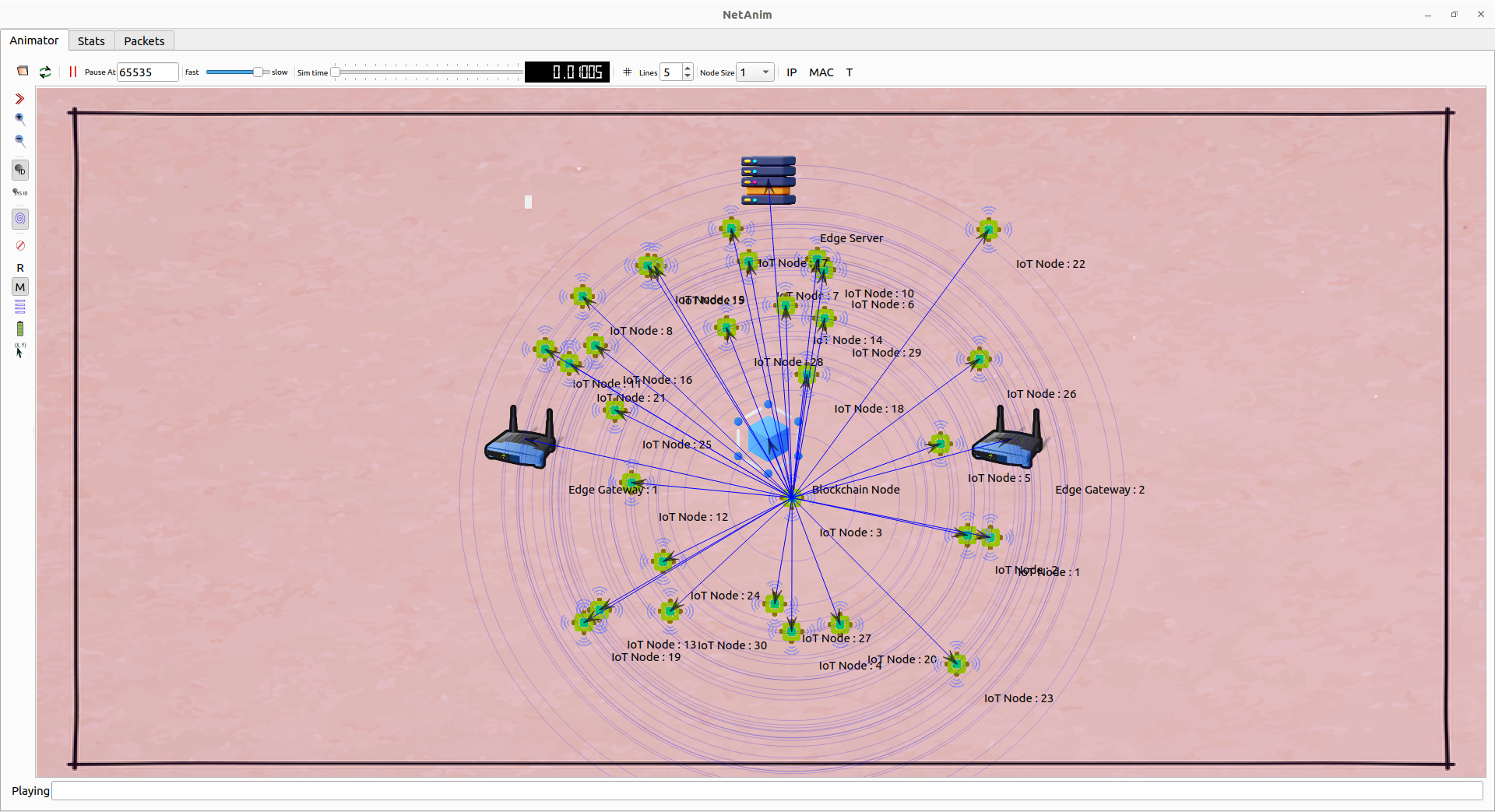
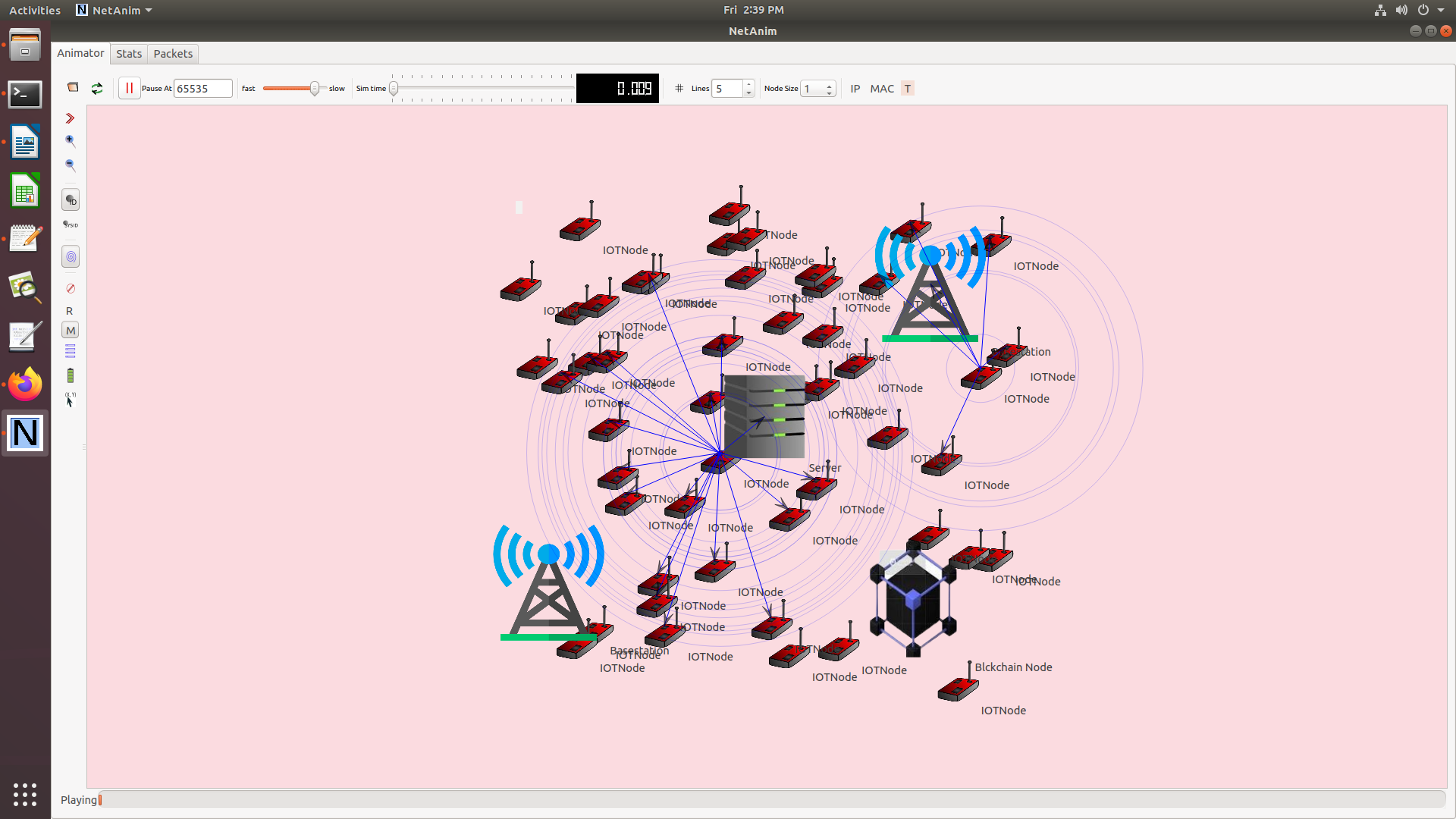
- Blockchain-Based Security for 5G IoT Networks
Goal: To assure safer interaction and data morality, the security of 5G IoT networks must be improved with blockchain mechanisms.
Advanced Components:
- For decentralized authorization and authentication, we intend to utilize blockchain.
- To attain safer and automated device handling, the smart contracts have to be applied.
Implementation Procedures:
- Configure Blockchain Network: Various environments such as Hyperledger or Ethereum should be employed.
- Create Smart Contracts: For device handling, data morality, and authentication, the smart contracts must be developed.
- Combine with IoT Devices: With the 5G network, the IoT devices have to be linked. Then, the blockchain-related security has to be applied.
- Simulation and Testing: In order to assess the functionality and security, utilize NS-3 or other major simulators.
- Performance Assessment: It is significant to evaluate metrics such as scalability, latency, and security.
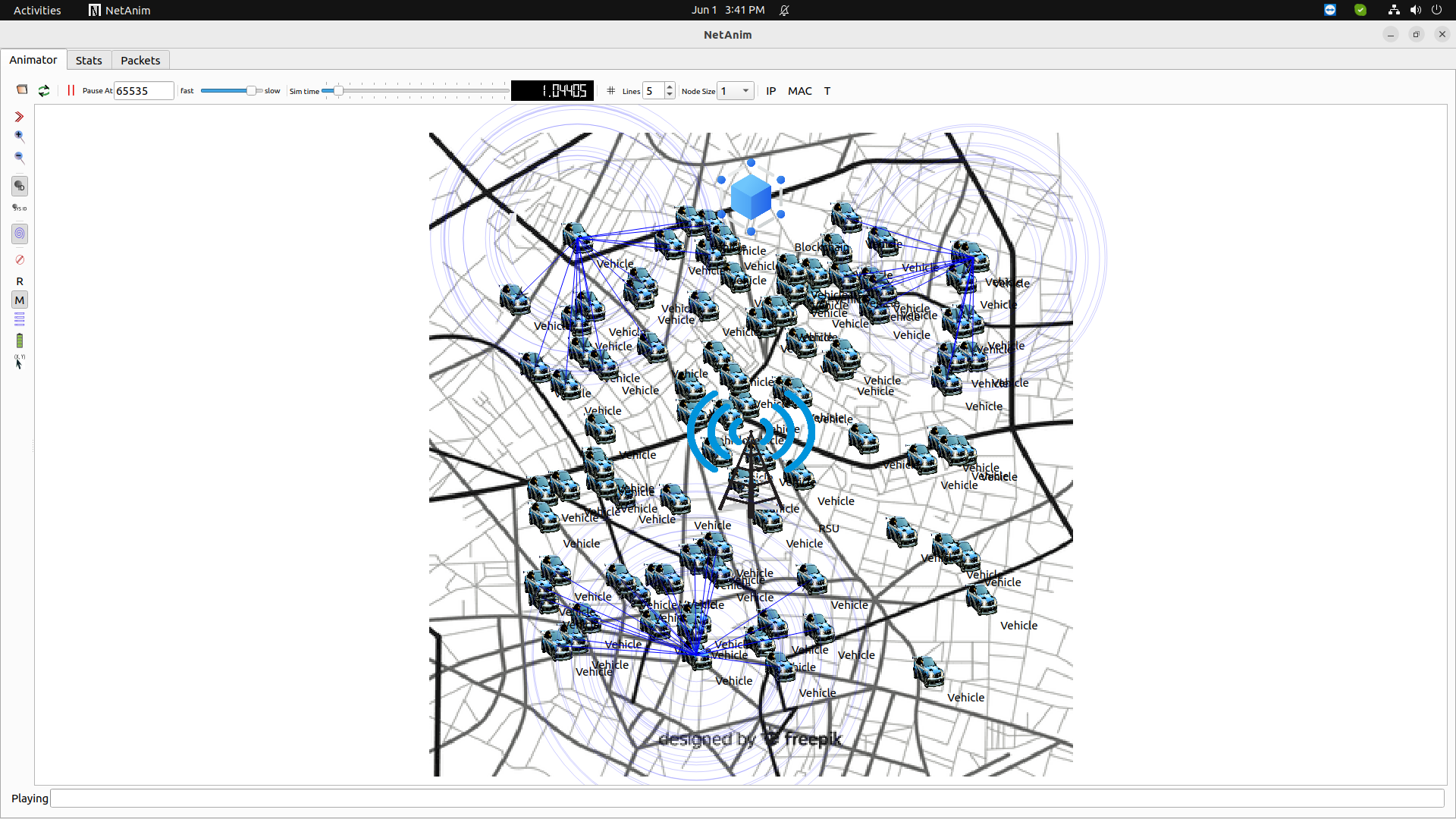
- 5G-Enhanced Autonomous Vehicle Communication System
Goal: For self-driving vehicles, a communication framework has to be created. To facilitate V2X (Vehicle-to-Everything) interaction, this framework should utilize the 5G mechanism.
Advanced Components:
- Particularly for actual-time data sharing, the low-latency communication protocols must be applied.
- For improving effectiveness and safety, forecast and handle traffic with the aid of AI algorithms.
Implementation Procedures:
- Create V2X Communication Protocols: Focus on applying efficient protocols such as DSRC or C-V2X.
- Configure Simulation Platform: Along with vehicular mobility models, the NS-3 has to be utilized.
- Incorporate AI Algorithms: For forecasting and handling traffic, plan to create AI models.
- Simulate Autonomous Vehicle Contexts: Across diverse traffic states, the AI algorithms and interaction should be examined.
- Performance Assessment: Different metrics like safety enhancements, reliability, and latency have to be evaluated.
- Energy-Efficient 5G Network Design
Goal: In addition to preserving greater functionality, the energy usage should be refined. For that, model an appropriate 5G network.
Advanced Components:
- Concentrate on utilizing energy harvesting methods and renewable energy sources.
- To adapt network parameters in a dynamic manner, we aim to apply AI-based energy handling algorithms.
Implementation Procedures:
- Create Energy Management Algorithms: In order to forecast and handle energy utilization, the AI models must be trained.
- Incorporate Renewable Energy Sources: Methods of energy harvesting should be applied. With the network, the renewable energy sources have to be linked.
- Simulate Network Contexts: To simulate energy consumption patterns and various network setups, make use of NS-3.
- Enhance Network Parameters: As a means to stabilize functionality and energy usage, the network arrangements must be adapted.
- Performance Assessment: It is crucial to assess different metrics like latency, throughput, and energy effectiveness.
- 5G-Based Disaster Response and Recovery System
Goal: For reacting to and retrieving from disaster, a 5G-related communication framework must be developed. In crisis conditions, it should offer faster and consistent connectivity.
Advanced Components:
- Even though the conventional framework is impaired, the connectivity has to be assured by applying ad-hoc and mesh networking.
- To introduce short-term communication networks, drones and other mobile components have to be employed.
Implementation Procedures:
- Create Ad-Hoc and Mesh Networking Protocols: For quick network placement, efficient protocols should be applied.
- Combine with Drones: To prolong network coverage, utilize drones which are offered with the abilities of 5G.
- Configure Simulation Platform: Focus on simulating disaster contexts by means of NS-3 or other equivalent tools.
- Implement Mobile Units: In disaster regions, offer communication networks in a rapid manner through deploying mobile components.
- Performance Assessment: Diverse metrics such as network reliability, coverage, and deployment speed have to be evaluated.
- 5G for Smart Agriculture
Goal: Specifically for enhancing resource handling and yield, assist smart agriculture applications through creating a 5G-related framework.
Advanced Components:
- Regarding crop wellness, weather, and soil conditions, we focus on gathering actual-time data by employing IoT sensors.
- To offer instant perceptions by processing data in a local manner, the edge computing must be applied.
Implementation Procedures:
- Implement IoT Sensors: Different agricultural parameters have to be tracked by installing sensors.
- Configure Edge Computing Nodes: In order to process sensor data, the edge computing environments should be utilized.
- Combine with 5G Network: With the 5G network, the edge nodes and sensors have to be linked.
- Create Data Analysis Algorithms: To offer valuable perceptions by examining data, apply efficient algorithms.
- Performance Assessment: Concentrate on assessing effect on production, latency, and data preciseness.
- 5G-Enabled Remote Healthcare System
Goal: To offer actual-time tracking and telemedicine assistance, a remote healthcare framework should be developed with a 5G mechanism.
Advanced Components:
- For actual-time tracking of a patient’s health, employ wearable devices.
- With less-latency video and data distribution, the telemedicine applications have to be created.
Implementation Procedures:
- Create Wearable Health Monitoring Devices: To monitor important health metrics and vital signs, develop robust devices.
- Configure Telemedicine Environment: For actual-time interaction, it is approachable to utilize environments such as WebRTC.
- Incorporate with 5G Network: Specifically for healthcare applications, assure less-latency and consistent connectivity.
- Build Data Analysis Tools: To examine health data, efficient tools must be applied. During any abnormalities, these tools should notify medical experts.
- Performance Assessment: For user contentment, latency, and reliability, the framework has to be assessed.
What are the important research protocols in 5g network?
In the domain of 5G networks, a wide range of protocols are available to accomplish particular objectives. Relevant to the 5G networks, we list out several major research protocols, along with their respective layers, uses, and concise outlines:
- Radio Resource Control (RRC) Protocol
- Layer: Control Plane (Layer 3)
- Outline: Among the Radio Access Network (RAN) and the User Equipment (UE), this protocol handles the connection.
- Uses:
- Mobility handling (handover).
- Measurement reporting and regulation.
- Connection arrangement and discharge.
- Radio bearer creation and rearrangement.
- Packet Data Convergence Protocol (PDCP)
- Layer: Layer 2 (Data Link Layer)
- Outline: For data that is transmitted among the network and the UE, it offers integrity security, encryption, and header compression.
- Uses:
- Integrity security of control plane data.
- Encryption and decryption of user data.
- Header compression with Robust Header Compression (RoHC).
- Radio Link Control (RLC) Protocol
- Layer: Layer 2 (Data Link Layer)
- Outline: Data packet segmentation, rearrangement, and retransmission are managed by this protocol to assure credible data distribution.
- Modes:
- For credible transmission with error rectification, consider Acknowledged Mode (AM).
- To facilitate actual-time services with less latency, focus on Unacknowledged Mode (UM).
- For broadcast and multicast services, reflect on Transparent Mode (TM).
- Medium Access Control (MAC) Protocol
- Layer: Layer 2 (Data Link Layer)
- Outline: This protocol focuses on scheduling, selecting data packets, and others. It also regulates the approach to the physical layer.
- Uses:
- Multiplexing and demultiplexing of data streams.
- For error rectification, consider HARQ (Hybrid Automatic Repeat Request).
- Scheduling and resource allocation.
- Non-Access Stratum (NAS) Protocol
- Layer: Control Plane (Layer 3)
- Outline: Along with mobility and session handling, this protocol specifically manages signaling among the core network and the UE.
- Uses:
- For initiating and handling data sessions, it focuses on session management.
- Mobility handling (for instance: monitoring area updates).
- Authentication and security handling.
- Service Data Adaptation Protocol (SDAP)
- Layer: Layer 2 (Data Link Layer)
- Outline: In the 5G NR user plane, the SDAP connects among data radio bearers and QoS flows.
- Uses:
- Assuring end-to-end QoS.
- Connection of QoS flows to radio bearers.
- QoS flow handling.
- GPRS Tunneling Protocol (GTP)
- Layer: User Plane (Layer 3)
- Outline: Among the core network and the RAN, the user data and signaling can be distributed by means of this protocol.
- Uses:
- QoS handling.
- Session handling and mobility assistance.
- Tunneling user data and signaling messages.
- Session Management Protocol (SMP)
- Layer: Control Plane (Layer 3)
- Outline: It deals with PDU (Packet Data Unit) sessions and handles their arrangement, alteration, and distribution.
- Uses:
- Session endurance and mobility handling.
- QoS enforcement and traffic flow template handling.
- Session initiation and setup.
- NG Application Protocol (NGAP)
- Layer: Control Plane (Layer 3)
- Outline: Specifically among the 5G core network (AMF) and the 5G Access Network (gNB), this protocol handles signaling.
- Uses:
- Session handling and QoS regulation.
- Mobility handling and handover techniques.
- UE registration and deregistration.
- Next Generation User Plane Protocol (NG-U)
- Layer: User Plane (Layer 3)
- Outline: Across the UPF (User Plane Function) and the gNB, the user plane data transmission can be supported by this protocol.
- Uses:
- QoS enforcement.
- Packet routing and switching.
- Data transmission.
- Diameter Protocol
- Layer: Application Layer
- Outline: In the core network, it can be employed for AAA procedure (authentication, authorization, and accounting).
- Uses:
- Safer interaction.
- Session accounting and charging.
- User authentication and authorization.
- HTTP/2 and HTTP/3
- Layer: Application Layer
- Outline: For safer and effective data transmission, these latest web protocols are widely utilized.
- Uses:
- Enhanced functionality and minimized latency (HTTP/3 with QUIC).
- Across a single connection, multiplexing several streams (HTTP/2).
- QUIC Protocol
- Layer: Transport Layer
- Outline: Safer, consistent, and rapid internet connections can be supported by this transport protocol.
- Uses:
- Stream multiplexing and flow regulation.
- Built-in encryption.
- Less-latency connection system.
- Stream Control Transmission Protocol (SCTP)
- Layer: Transport Layer
- Outline: For signaling transmission in 5G networks, this protocol can be employed, which is related to transport-layer.
- Uses:
- Flow and congestion management.
- Multi-homing support for redundancy.
- Consistent and secure transmission of data streams.
- Multiprotocol Label Switching (MPLS)
- Layer: Network Layer
- Outline: Across a network, the packets can be transmitted by means of this technique with labels.
- Uses:
- Network scalability and adaptability.
- Effective data transmission and routing.
- Traffic engineering and QoS handling.
For supporting you to create a project in the field of 5G, we suggested a few innovative plans, including explicit goals and implementation procedures for each. Suitable for the 5G networks, numerous significant research protocols are specified by us, which are more useful and applicable for several purposes.
5G Communication Projects Topics & Ideas
5G Communication Projects Topics & Ideas that matches for all levels of scholar are shared below, we will guide you with every step for your work. Keep in touch with our team for trending 5G topics and ideas.
- On the performance of blockchain-enabled RAN-as-a-service in beyond 5G networks
- Potential applications of 5G network technology for climate change control: A scoping review of Singapore
- RELIABLE: Resource allocation mechanism for 5G network using mobile edge computing
- LEGA: a lightweight and efficient group authentication protocol for massive machine type communication in 5G networks
- Efficient and privacy-aware power injection over AMI and smart grid slice in future 5G networks
- Performance evaluation on virtualization technologies for nfv deployment in 5g networks
- Video quality in 5G networks: context-aware QoE management in the SDN control plane
- Mobile network testing of 5G NR FR1 and FR2 networks: Challenges and solutions
- Resource allocation for network slicing in 5G telecommunication networks: A survey of principles and models
- Universal access in 5G networks, potential challenges and opportunities for urban and rural environments
- Quantum-elliptic curve cryptography for multihop communication in 5G networks
- Authentication and Key Agreement Protocol for Secure Traffic Signaling in 5G Networks
- A cloud radio access network with power over fiber toward 5G networks: QoE-guaranteed design and operation
- Joint cmWave-based multiuser positioning and network synchronization in dense 5G networks
- Robust radio resource allocation in MISO-SCMA assisted C-RAN in 5G networks
- A parametric quality model to evaluate the performance of tele-operated driving services over 5G networks
- Investigation of QoS performance evaluation over 5G network for indoor environment at millimeter wave bands
- A novel PUF-based group authentication and data transmission scheme for NB-IoT in 3GPP 5G networks
- Distributed dynamic cluster-head selection and clustering for massive IoT access in 5G networks
- Leveraging synergy of SDWN and multi‐layer resource management for 5G networks