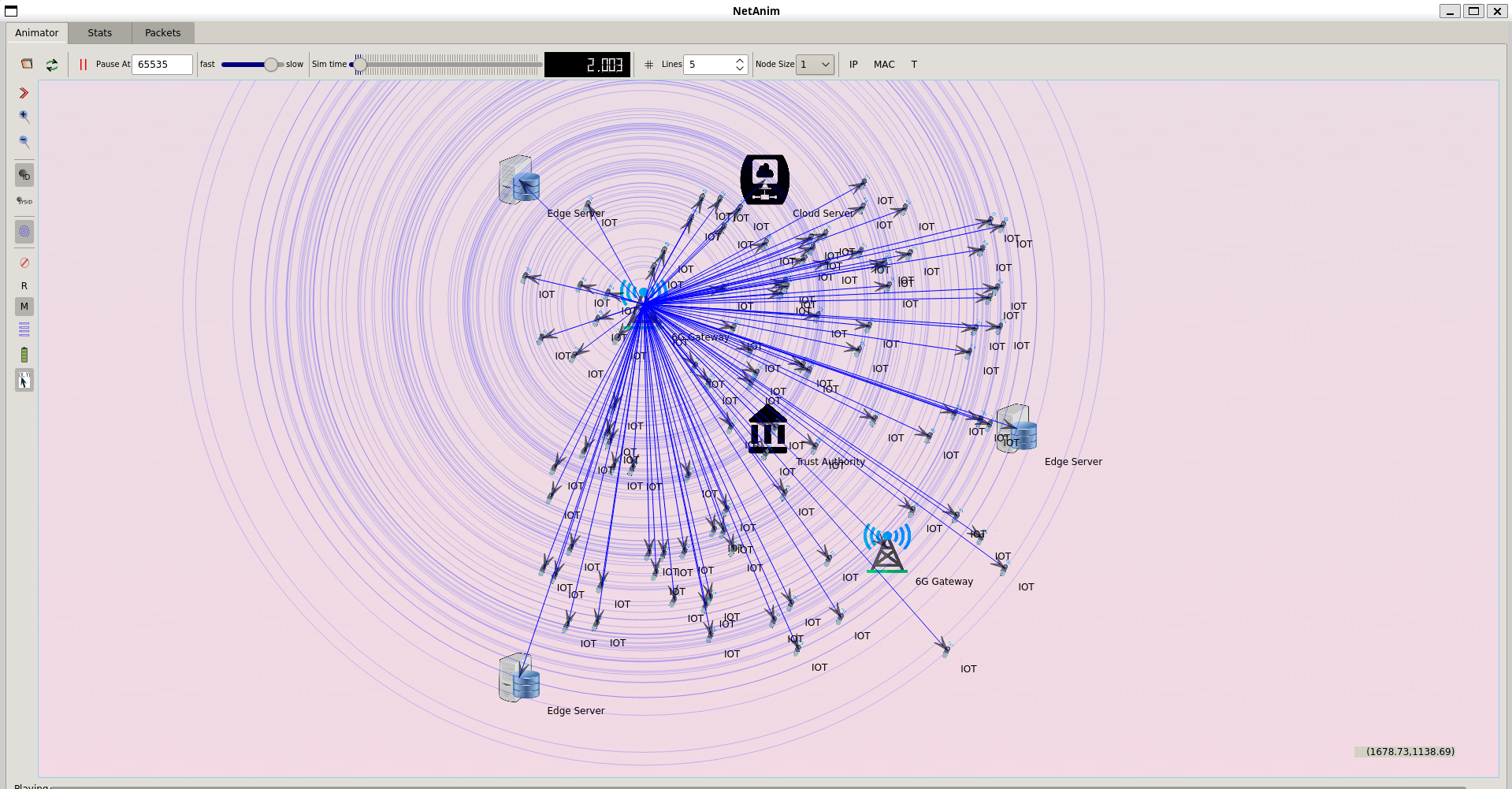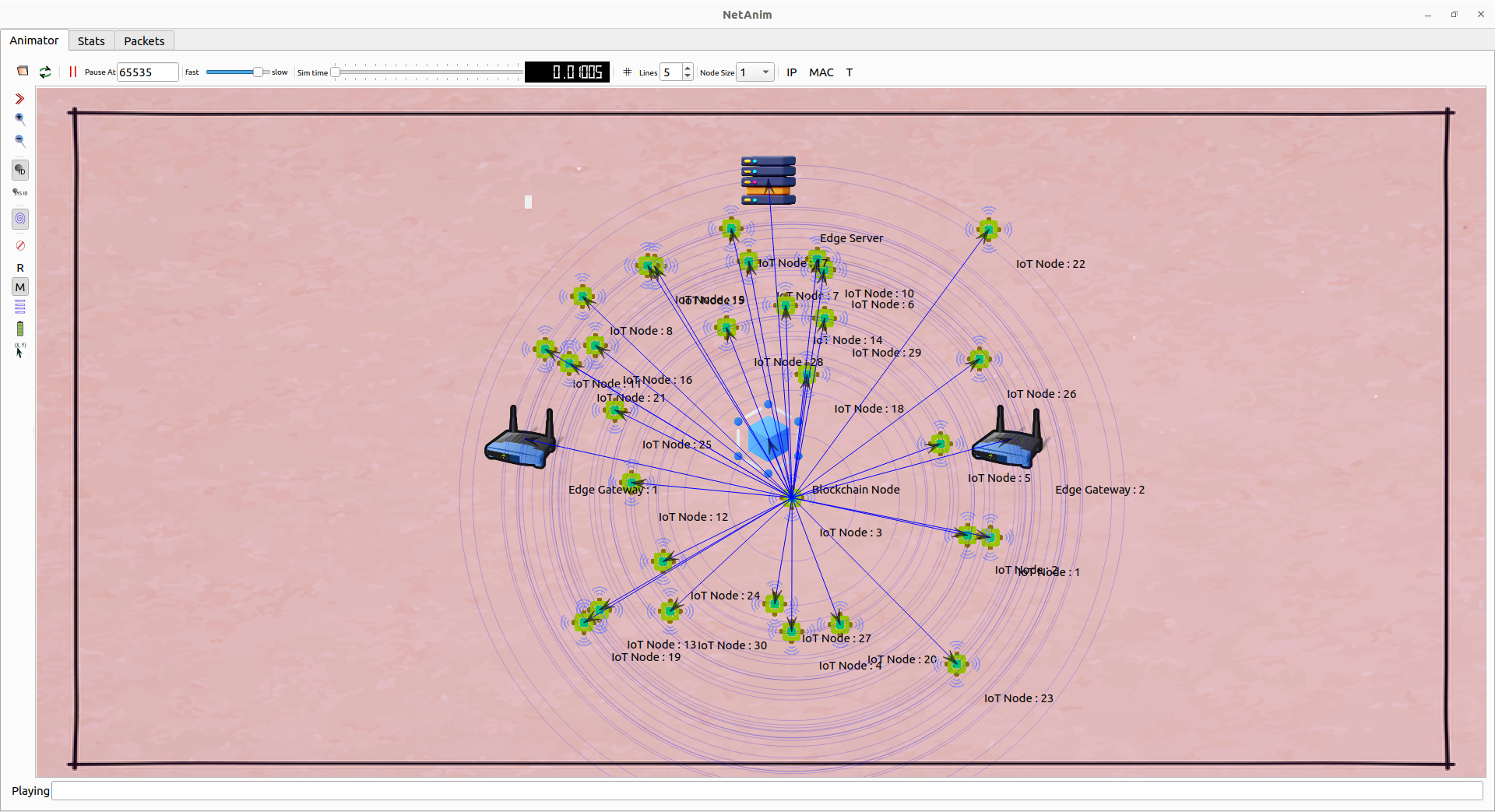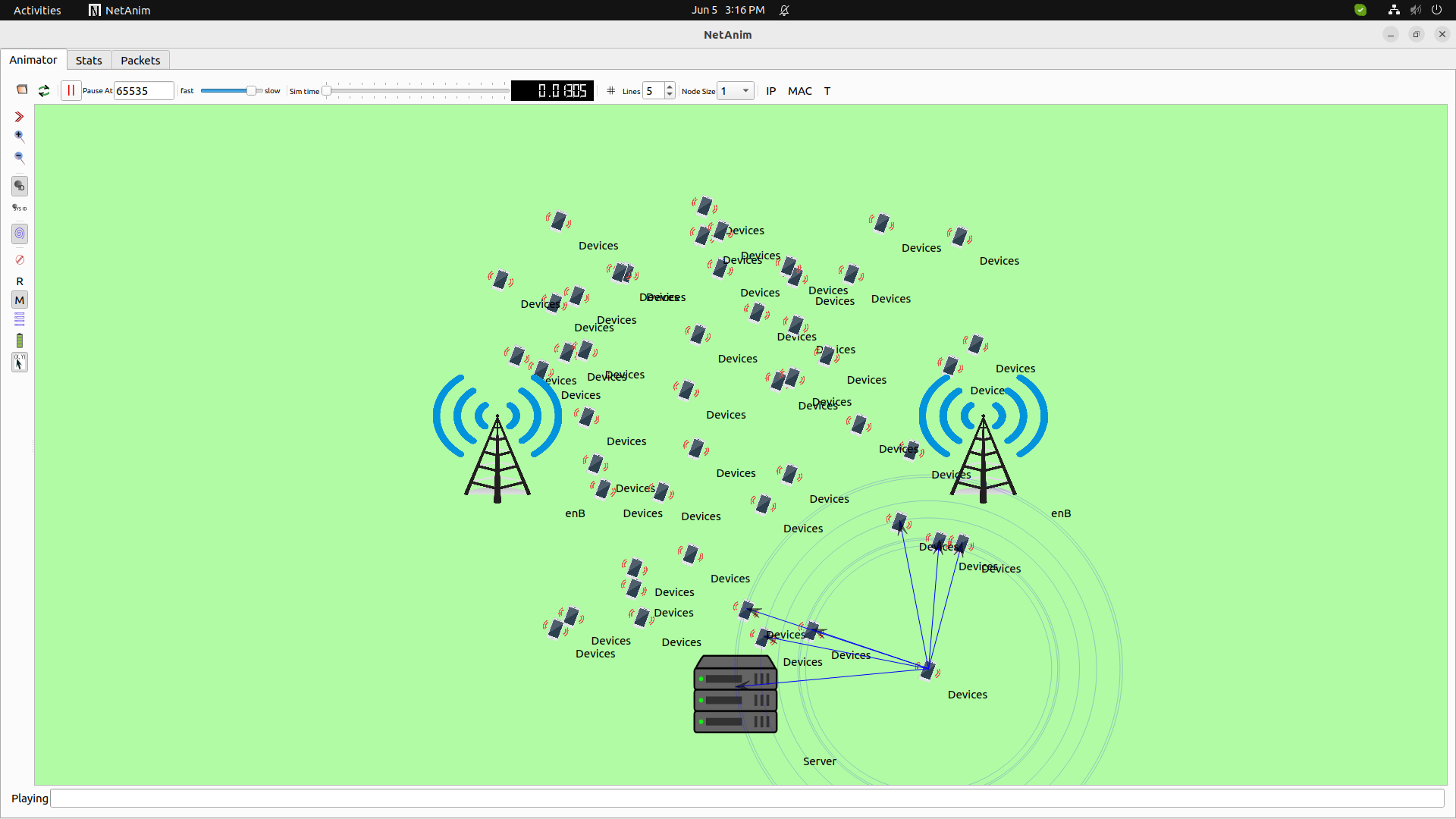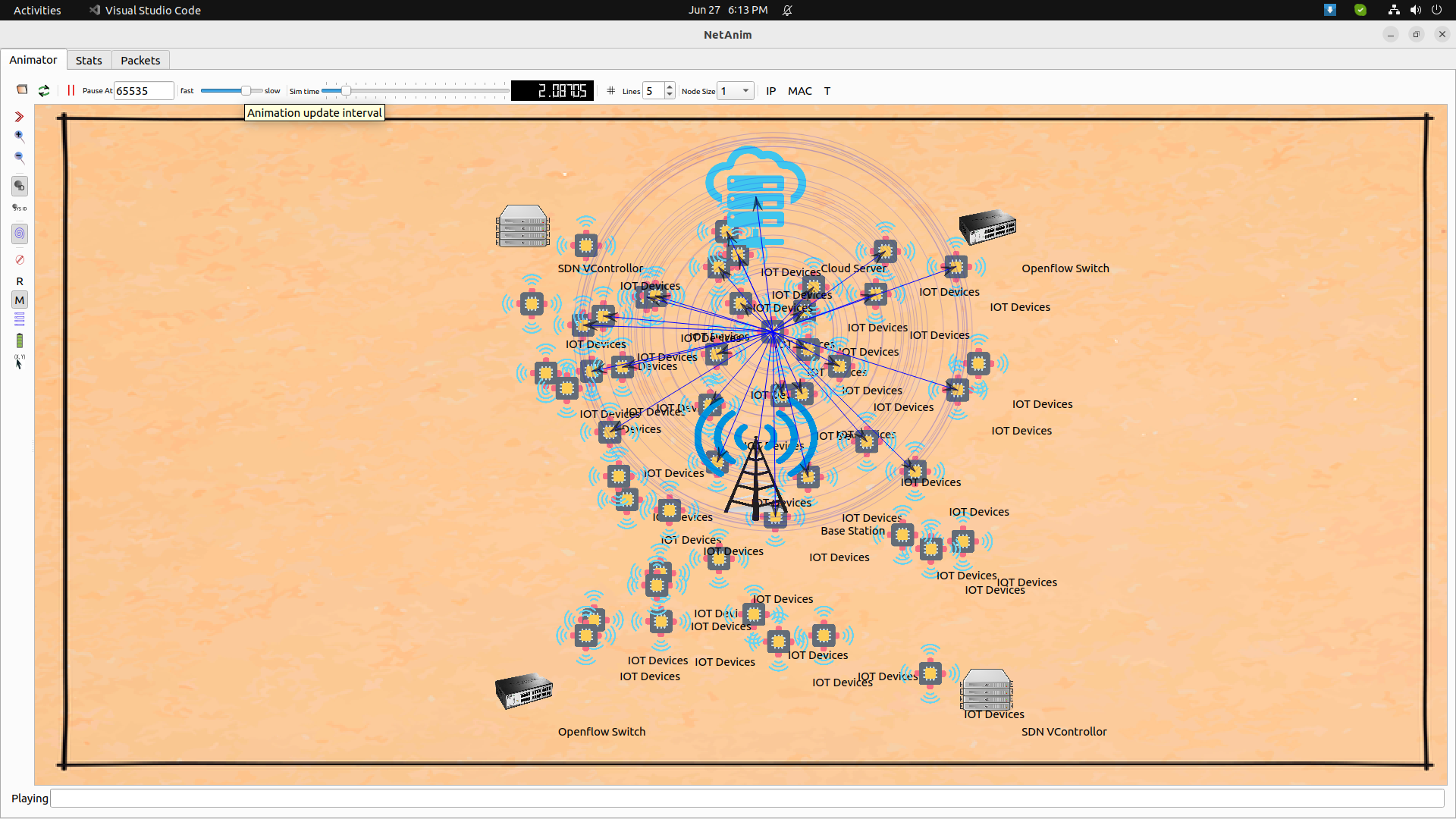
Research Ideas On 5G Network with some key problems and potential research directions that address it are listed below, our team stay updated on all areas of 5G so get instant project ideas and support from us.
In the domain of 5G networks, numerous issues exist, which should be resolved by following major procedures. Relevant to 5G networks, we list out a few significant issues. To solve these issues, some research areas are also suggested by us:
- Spectrum Management and Allocation
Issue: The increasing requirement for bandwidth has to be managed. For that, spectrum must be handled and assigned for 5G networks in an effective manner.
Possible Challenges:
- Inadequacy of spectrum must be considered. Then, examine the requirement for effective usage.
- It is important to associate with other wireless mechanisms (for instance: Wi-Fi, LTE).
- Focus on the dynamic spectrum distribution and allocation.
Research Areas:
- Dynamic Spectrum Access: To enhance utilization, algorithms have to be created for actual-time allocation and distribution of spectrum.
- Cognitive Radio Networks: In order to support dynamic spectrum sensing and adaptive allocation, the cognitive radio methods must be applied.
- Millimeter-Wave Communication: To attain greater capability, the application of mmWave bands has to be researched. For signal attenuation and obstruction, we plan to explore propagation features and reduction methods.
- Network Slicing
Issue: To assist various applications that have particular QoS needs, the network slices have to be developed and handled.
Possible Challenges:
- Resource allocation in a dynamic and adaptable manner.
- Consider slice isolation and protection.
- End-to-end arrangement and handling.
Research Areas:
- Machine Learning for Network Slicing: To forecast requirements and assign resources in a dynamic way, the ML algorithms have to be used.
- Isolation Mechanisms: Among slices, we intend to assure rigid isolation by creating methods. This is specifically for obstructing security violations and interference.
- Orchestration Frameworks: For the arrangement of network slices, extensive frameworks should be modeled. Among core networks and RAN, continuous functioning has to be assured.
- Latency and Reliability
Issue: Particularly for crucial applications, it is important to assure URLLC (ultra-reliable and low-latency communication).
Possible Challenges:
- For industrial automation and autonomous driving, strict latency needs have to be fulfilled.
- In more dynamic platforms, reliability must be assured.
- Concentrate on stabilizing throughput and latency.
Research Areas:
- Edge Computing: Through processing data nearer to the user, consider latency minimization. In this mission, the contribution of edge computing should be explored.
- Enhanced Scheduling Algorithms: To reduce delays and select URLLC traffic, improved scheduling algorithms have to be created.
- Redundancy and Reliability Mechanisms: In order to improve reliability, redundancy methods like error correction and multi-path communication must be applied.
- Energy Efficiency
Issue: In addition to preserving greater functionality, the energy usage of 5G networks should be minimized.
Possible Challenges:
- In compact network placements, focus on high energy usage.
- Plan to stabilize energy effectiveness and functionality.
- Renewable energy sources have to be incorporated.
Research Areas:
- Green Communication Protocols: Protocols must be modeled, which can preserve functionality and refine energy usage.
- Energy Harvesting: To energize network elements, we aim to gather energy from environmental sources by investigating techniques.
- Dynamic Power Management: On the basis of user requirement and network density, adapt power in a dynamic manner by creating efficient methods.
- Security and Privacy
Issue: Specifically in 5G networks, consider data and communication and assure its security and confidentiality.
Possible Challenges:
- It is crucial to assure data morality and secure from cyber-assaults.
- IoT networks and devices have to be protected.
- With enormous data gathering and processing, examine confidentiality problems.
Research Areas:
- Blockchain for Security: For decentralized management, data morality, and safer authentication, the application of blockchain mechanism has to be explored.
- AI for Intrusion Detection: Specifically for actual-time identification and reduction of cyber hazards, create AI-related intrusion detection systems (IDS).
- Privacy-Preserving Mechanisms: When the data analytics process, secure user information by applying methods like homomorphic encryption and differential privacy.
- Interference Management
Issue: To enhance network functionality in compact 5G placements, the interference has to be reduced.
Possible Challenges:
- Adjacent-channel and co-channel interference.
- Among macro and micro cells, consider interference.
- In heterogeneous networks, focus on handling interference.
Research Areas:
- Inter-Cell Interference Coordination (ICIC): Resource allocation among cells has to be managed by creating enhanced ICIC methods.
- Beamforming and MIMO: To reduce interference and guide signals, the utilization of massive MIMO and beamforming must be investigated.
- Adaptive Frequency Reuse: To minimize interference and allocate spectrum in a dynamic way, we plan to apply adaptive frequency reuse systems.
- Mobility Management
Issue: For mobile users, the ideal functionality and continuous linkage must be assured.
Possible Challenges:
- To preserve connectivity at the time of motion, reflect on handover techniques.
- In ultra-dense networks, mobility has to be handled.
- High-speed mobility should be managed (for instance: in vehicular networks).
Research Areas:
- Predictive Handover Algorithms: Efficient algorithms have to be created, which can minimize packet loss and latency by forecasting user mobility and handling handovers in advance.
- Context-Aware Mobility Management: Mobility management methods must be applied, which can facilitate enhanced handovers by examining user scenarios (for instance: location, speed).
- Integration with V2X: For continuous linkage in vehicular networks, explore the mobility handling incorporation with V2X (Vehicle-to-Everything) communication.
- Backhaul and Fronthaul Optimization
Issue: Among the core network and the RAN, it is significant to guarantee robust and effective connections.
Possible Challenges:
- For fronthaul and backhaul connections, consider high data rate needs
- Concentrate on problems related to synchronization and latency.
- Scalability and implementation in a cost-efficient manner.
Research Areas:
- High-Speed Optical Networks: To fulfill data rate requirements, the application of high-speed optical networks has to be investigated for fronthaul and backhaul.
- Wireless Backhaul Solutions: For cost-efficient and adaptable placement, we intend to explore wireless backhaul solutions.
- Latency Optimization: To assure coordination among core network elements and RAN and reduce latency, efficient methods must be created.
- Integration with IoT
Issue: Including effective handling and linkage, a wide range of IoT devices should be enabled.
Possible Challenges:
- To manage a wide range of devices, focus on scalability.
- Particularly for battery-powered IoT devices, consider energy-effective communication.
- For various IoT applications, offer consistent and safer connectivity.
Research Areas:
- NB-IoT and eMTC: For greater energy effectiveness and scalability, improvements must be explored to the enhanced Machine-Type Communication (eMTC) and Narrowband IoT (NB-IoT).
- IoT Security Protocols: Appropriate for IoT devices, the lightweight security protocols have to be created.
- IoT Device Management: For extensive IoT placements, innovative management methods should be applied. It could encompass firmware updates and remote setup.
How to write literature survey in 5g network research?
Writing a literature survey is a compelling as well as intricate process that must be conducted by adhering to numerous guidelines. As a means to carry out this process in 5G network studies, we provide a well-formatted procedure, along with explicit instances:
- Introduction
- Purpose: Regarding the chosen topic, offer a brief outline. Then, the objective of the literature survey has to be described.
- Important Points:
- For the 5G mechanism, a concise summary must be provided.
- In the latest networking, emphasize the significance of 5G.
- Focus on the literature survey and mention its objective and range.
Instance:
In mobile communication, the emergence of the 5G mechanism ensures enhanced connectivity, less latency, and greater data rates and also indicates a major progression. Regarding the existing studies in 5G networks, an extensive review must be offered, which is the significant goal of this literature survey. It helps to detect gaps and emphasize major developments. To conduct even more exploration in crucial areas like security, massive MIMO, and network slicing, it initializes the foundation.
- Methodology
- Purpose: To gather and examine the literature, the employed approach should be explained.
- Important Points:
- The literature sources have to be examined. It could be from academic databases such as ACM Digital Library, Google Scholar, and IEEE Xplore.
- Highlight the utilized keywords and search terminologies.
- Exception and eligibility conditions must be included.
- Regarding the analysis procedure, we should provide a concise explanation.
Instance:
By means of several sources like ACM Digital Library, Google Scholar, and IEEE Xplore, the literature survey process was carried out. Some major key-terms such as “millimeter-wave communication,” “5G Security,” “massive MIMO,” “network slicing,” and “5G network” were utilized to conduct the exploration. On the basis of publication date, citation count, and applicability, articles were chosen. Within the previous five years, the selected papers have to be published. In order to detect significant concepts, research gaps, and developments, the gathered studies were examined.
- Major Concepts and Topics
- Purpose: In the literature, the major topics and concepts have to be detected and described.
- Important Points:
- As important topics or concepts, the literature has to be arranged.
- For every concept, an outline of discoveries must be offered.
- It is important to emphasize major developments and contributions.
Network Slicing
Instance:
On a distributed physical infrastructure, several virtual networks can be developed through the support of network slicing, which is an important characteristic of 5G networks. To enhance the functionality of network slices, the capability of dynamic resource allocation algorithms is established in research by Chen et al. (2019) and Zhang et al. (2018). As emphasized by Li et al. (2020), some issues are still presented in assuring safety and slice isolation.
Massive MIMO
Instance:
As a means to improve spectral effectiveness and capability, a wide range of antennas are utilized by massive MIMO mechanisms. With the aid of innovative beamforming approaches, major enhancements in coverage and data rates are demonstrated in studies by Ngo et al. (2018) and Larsson et al. (2017). However, even more investigation is required for realistic deployment problems which are addressed by Björnson et al. (2019). Some of the potential problems are power usage and hardware intricacy.
Security and Privacy
Instance:
When considering the higher connectivity and data transmission in 5G networks, the safety and confidentiality are important issues. To improve safety, different authentication and encryption protocols are suggested in studies by Liu et al. (2019) and Zhang et al. (2018). For decentralized security handling, a relevant technique is provided by the blockchain mechanism, which is investigated by Sharma et al. (2020). In addition to maintaining functionality, the actual-time security has to be assured. But, this aspect is still an existing problem.
- Detecting Gaps and Research Scopes
- Purpose: In the current studies, the potential gaps must be emphasized. For further exploration, suggest possible areas.
- Important Points:
- Less investigated areas or unsolved problems have to be detected.
- Possible research scopes should be addressed clearly.
- For even more exploration, the requirement has to be explained.
Instance:
Numerous gaps are presented in the studies on the 5G network, even though there are several major developments. When focusing on network slicing algorithms, even more exploration is needed to assure efficient security and slice isolation, although they have enhanced resource allocation. To solve power and hardware efficacy problems, further study is essential for the realistic deployment of massive MIMO frameworks. Extensive security systems have to be created in upcoming studies, which can preserve network functionality and utilize blockchain mechanisms. For understanding the overall capability of 5G networks, it is important to solve these gaps efficiently.
- Conclusion
- Purpose: From the literature survey, the major discoveries and their impacts should be outlined.
- Important Points:
- Significant concepts and discoveries have to be restated.
- For realistic applications and upcoming studies, the impacts must be considered.
- By focusing on solving detected gaps, we have to offer concluding points regarding their significance.
Instance:
In 5G network studies, major developments are analyzed through this literature survey. It encompasses various significant topics like security, millimeter-wave communication, massive MIMO, and network slicing. Specifically in fields such as extensive security approaches, realistic MIMO deployment, and slice isolation, numerous issues and gaps are still presented despite the important developments. For the effective 5G network placement and functionality, these problems must be solved by means of in-depth exploration. Through this process, the future of mobile communication can be supported.
- References
- Purpose: In the literature survey, consider the all cited sources and offer an extensive collection of them.
- Important Points:
- By following a constant citation style (for instance: APA, IEEE), we need to specify all references.
- All sources have to be encompassed, which are cited in the text. Assuring this aspect is crucial.
Emphasizing the domain of 5G networks, we specified several major issues, along with research areas. For assisting you to write a literature survey in an efficient manner, a detailed guideline is offered by us, including explicit goals, important points, and instances.
Research On 5G Network
Research On 5G Network may be difficult for scholars if you face difficulties in any of your research then we are ready to help you. Get to know some of the interesting project ideas on 5G.
- Planning capacity for 5G and beyond wireless networks by discrete fireworks algorithm with ensemble of local search methods
- Trajectory optimization for UAV-assisted relay over 5G networks based on reinforcement learning framework
- An experimental publish-subscribe monitoring assessment to Beyond 5G networks
- Efficient authentication and re-authentication protocols for 4G/5G heterogeneous networks
- Synchronization in 5G networks: a hybrid Bayesian approach toward clock offset/skew estimation and its impact on localization
- Aspirations, challenges, and open issues for software-based 5G networks in extremely dense and heterogeneous scenarios
- Leveraging 5G network for digital innovation in small and medium enterprises: a conceptual review
- Green-oriented multi-techno link adaptation metrics for 5G heterogeneous networks
- Interference cancelation scheme with variable bandwidth allocation for universal filtered multicarrier systems in 5G networks
- MoLocation-based distributed sleeping cell detection and root cause analysis for 5G ultra-dense networks
- A blockchain-based privacy-preserving 5G network slicing service level agreement audit scheme
- Designing the 5G network infrastructure: a flexible and reconfigurable architecture based on context and content information
- A novel automobile antenna for vehicles communication of IoT systems in 5G network
- 5G-QoE: QoE Modelling for Ultra-HD Video Streaming in 5G Networks
- Biologically Inspired Resource Allocation for Network Slices in 5G-Enabled Internet of Things
- Efficient and Reliable Management of 5G Network Slicing based on Deep Learning
- A Framework for Performance Evaluation of Network Function Virtualisation in 5G Networks
- Context-Aware Traffic Prediction: Loss Function Formulation for Predicting Traffic in 5G Networks
- A Delay-Aware Deployment Policy for End-to-End 5G Network Slicing
- Data enabled Self-Organizing Network with Adaptive Antennas based on Proactive Prediction for Enabling 5G