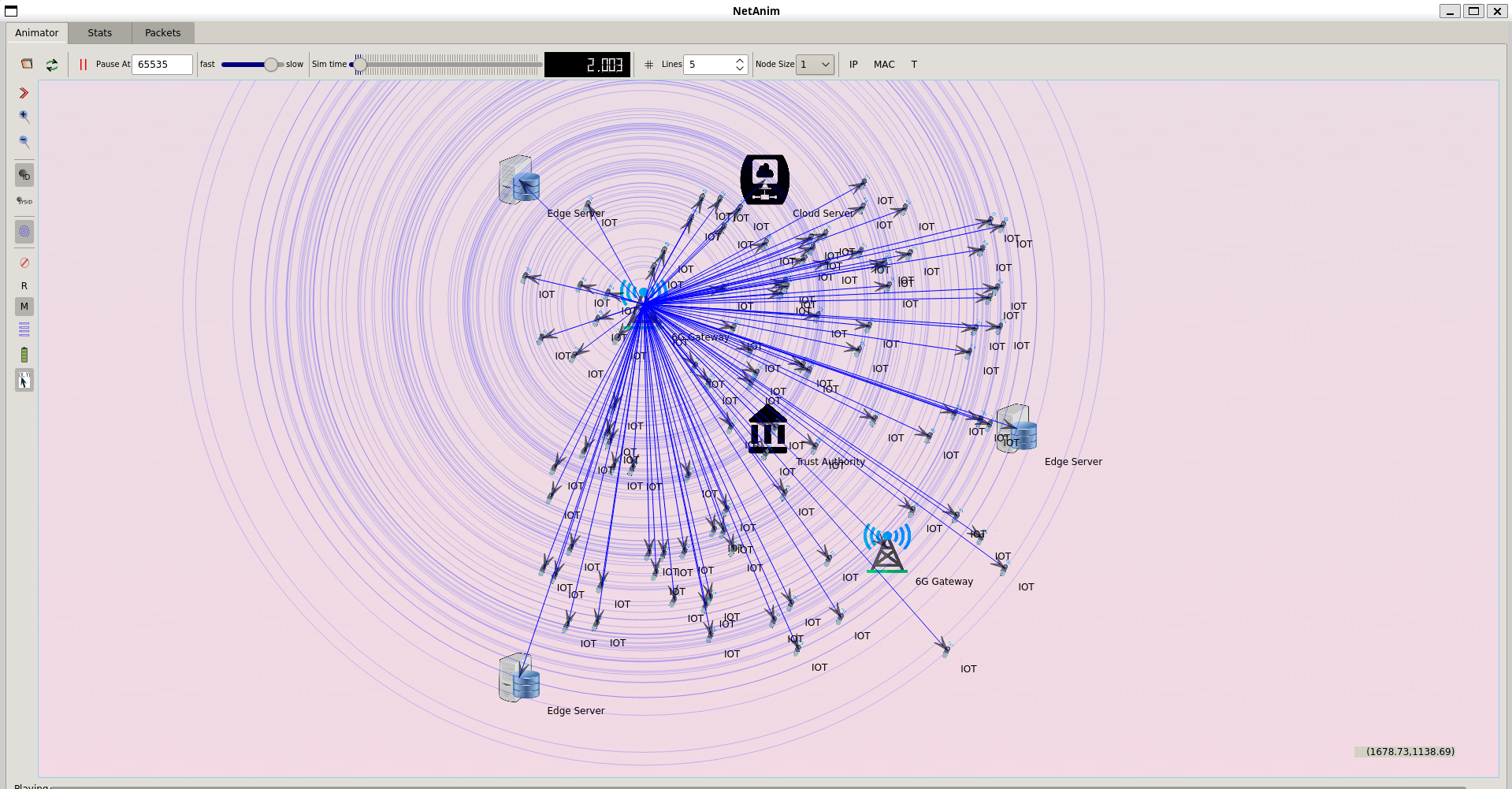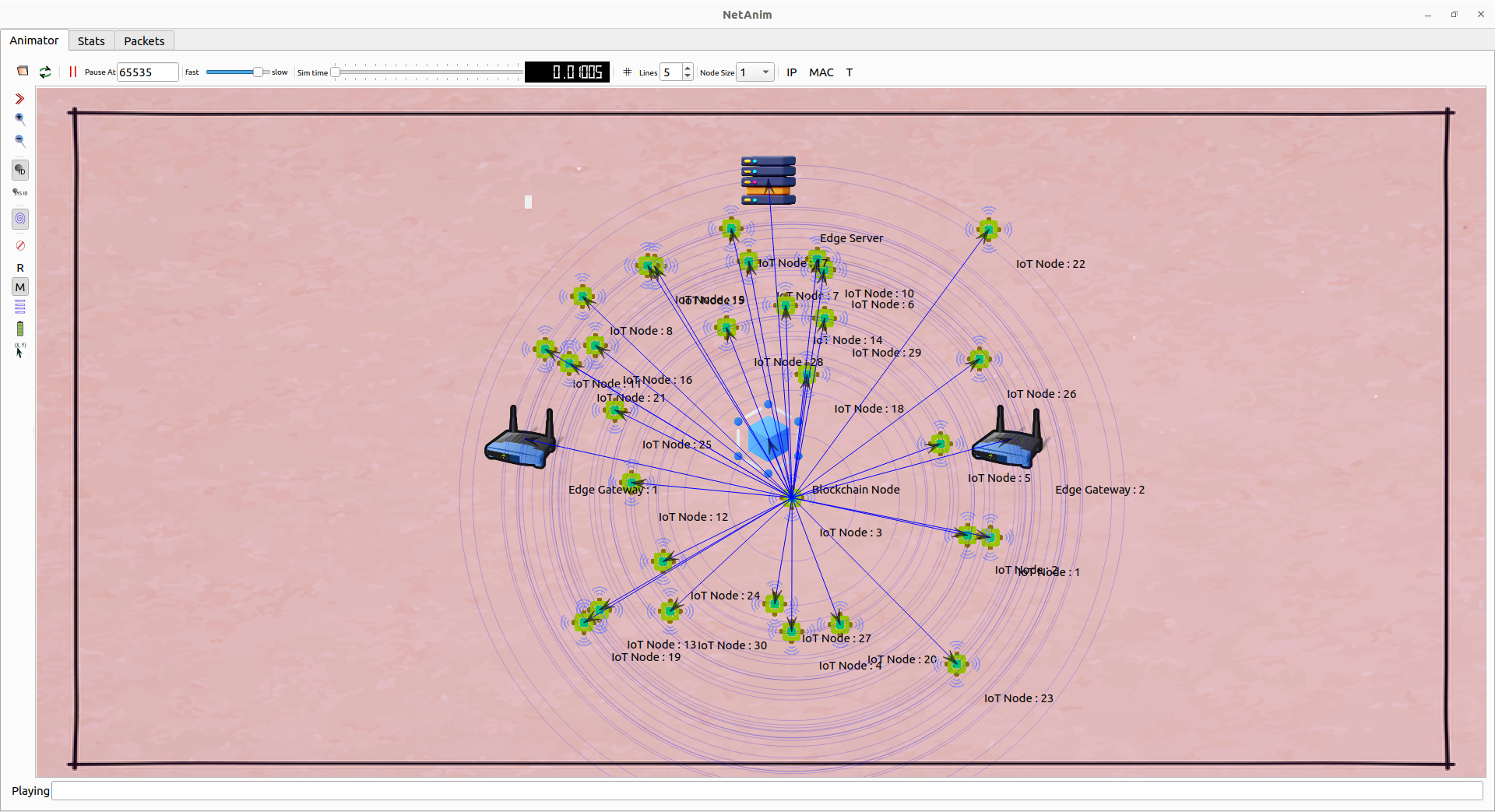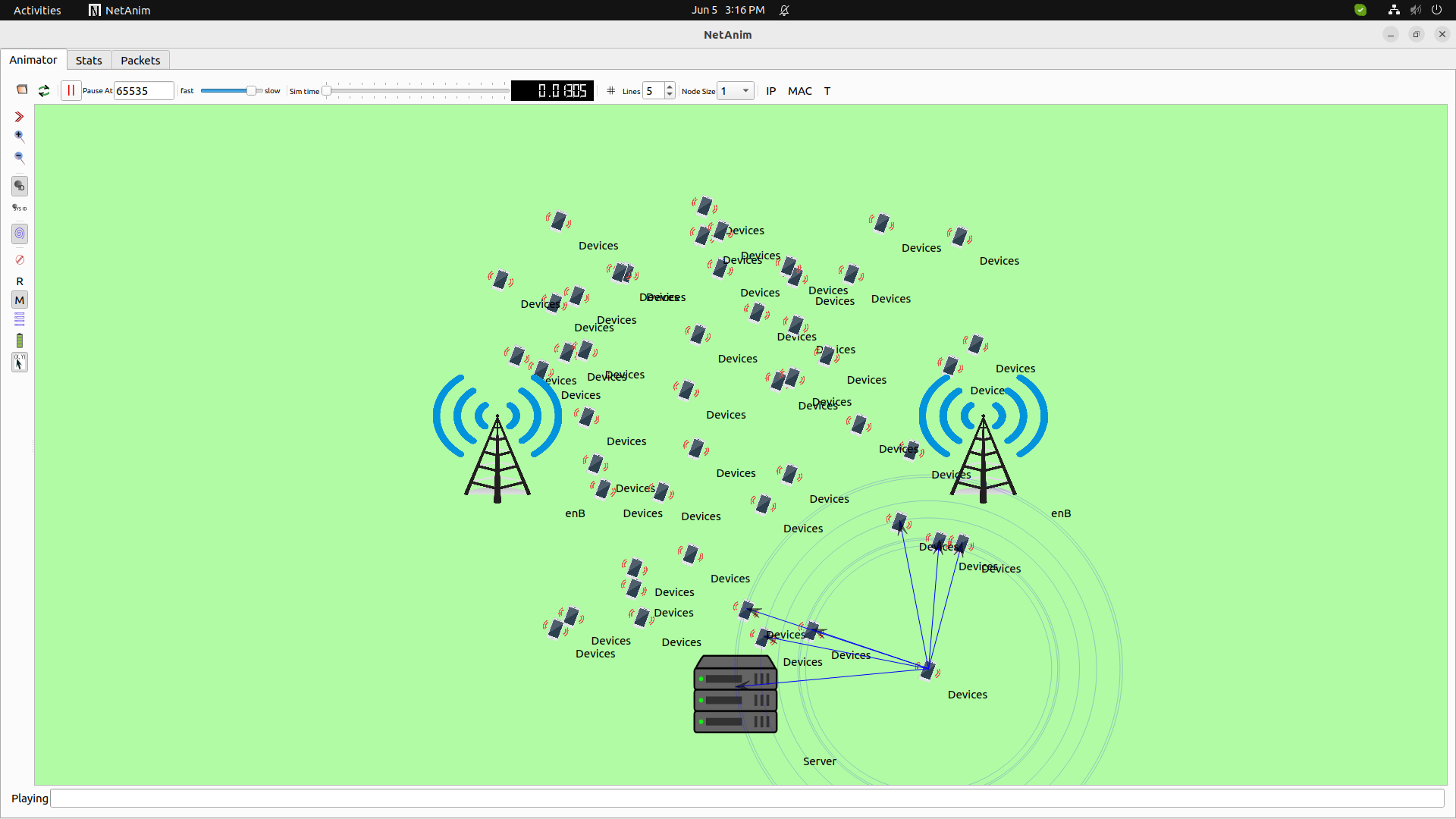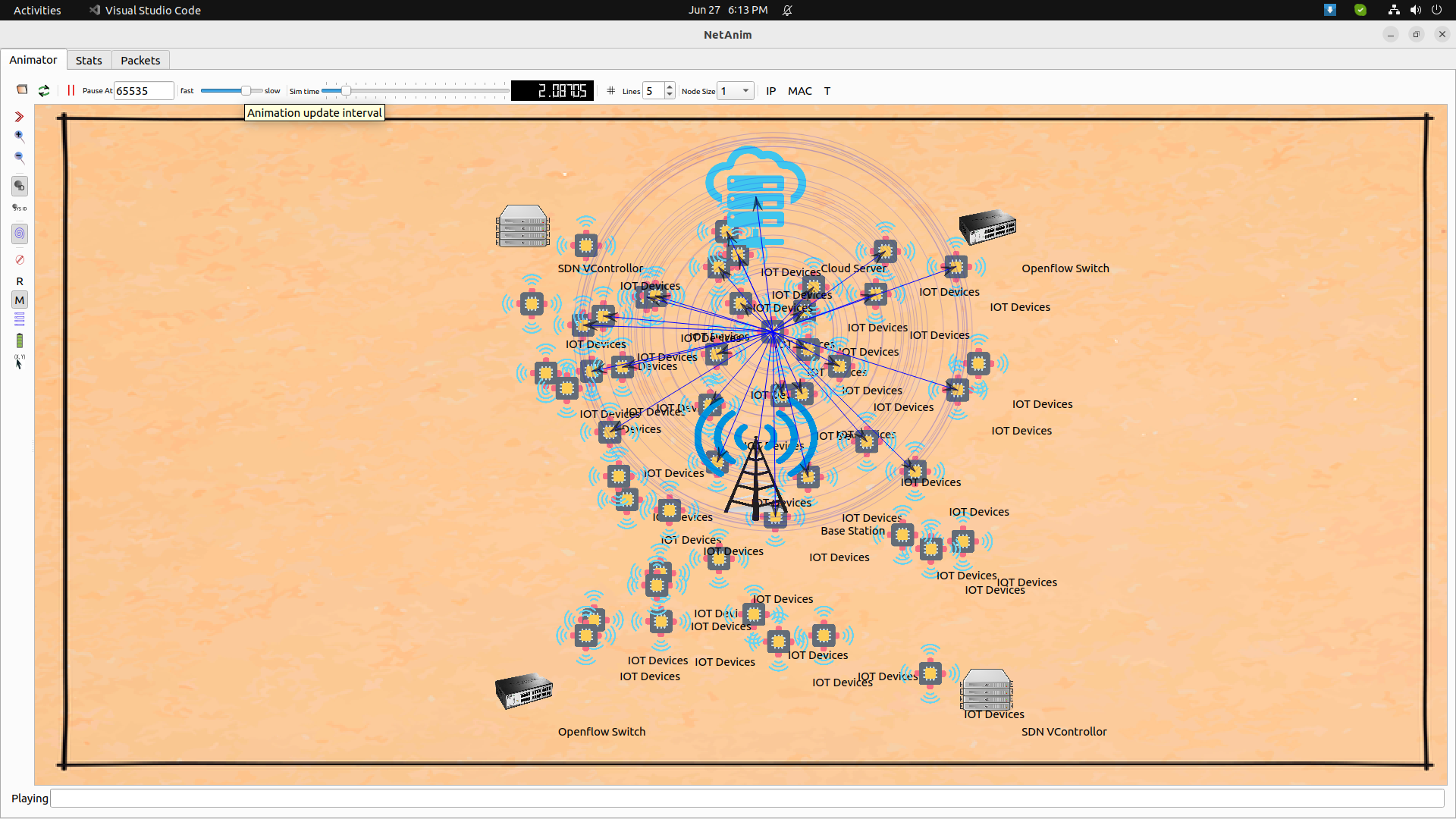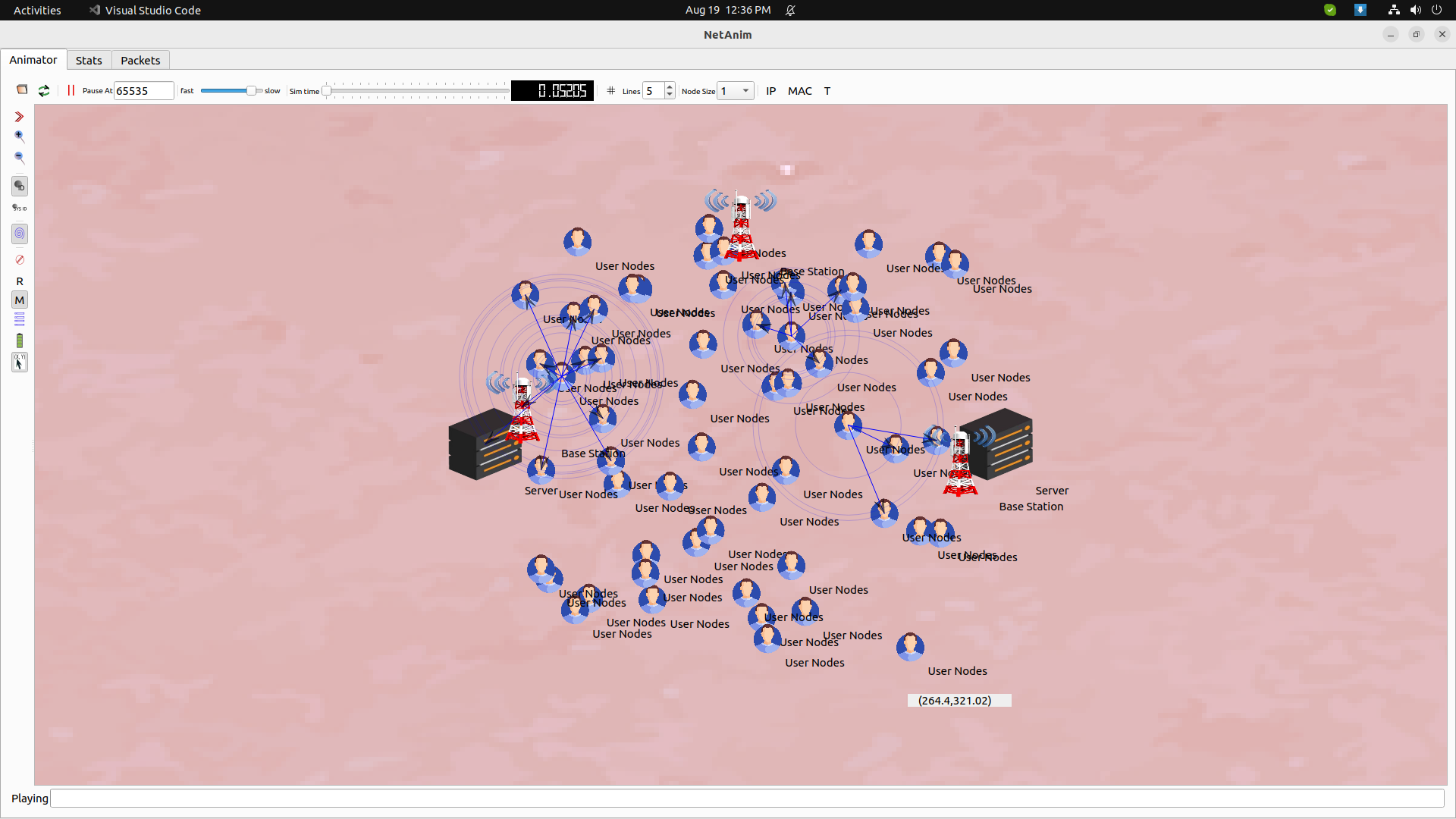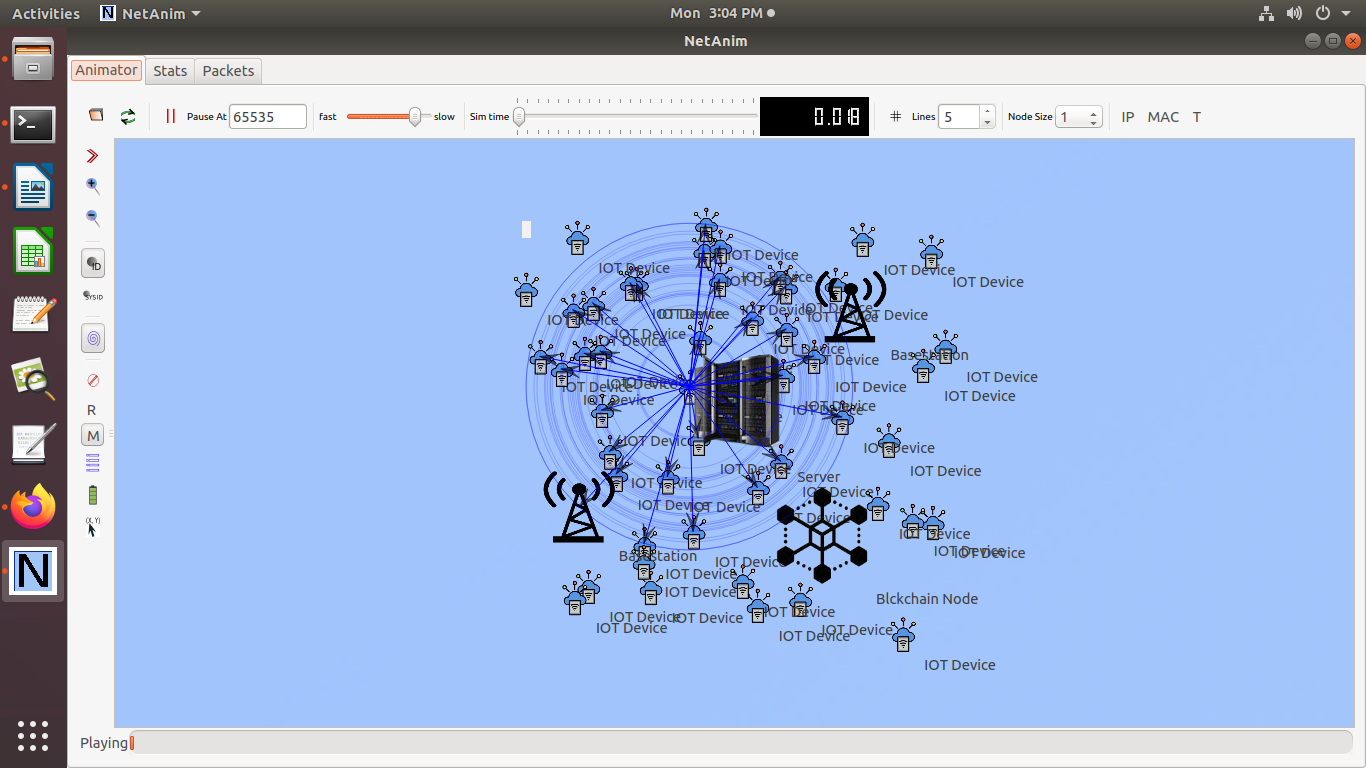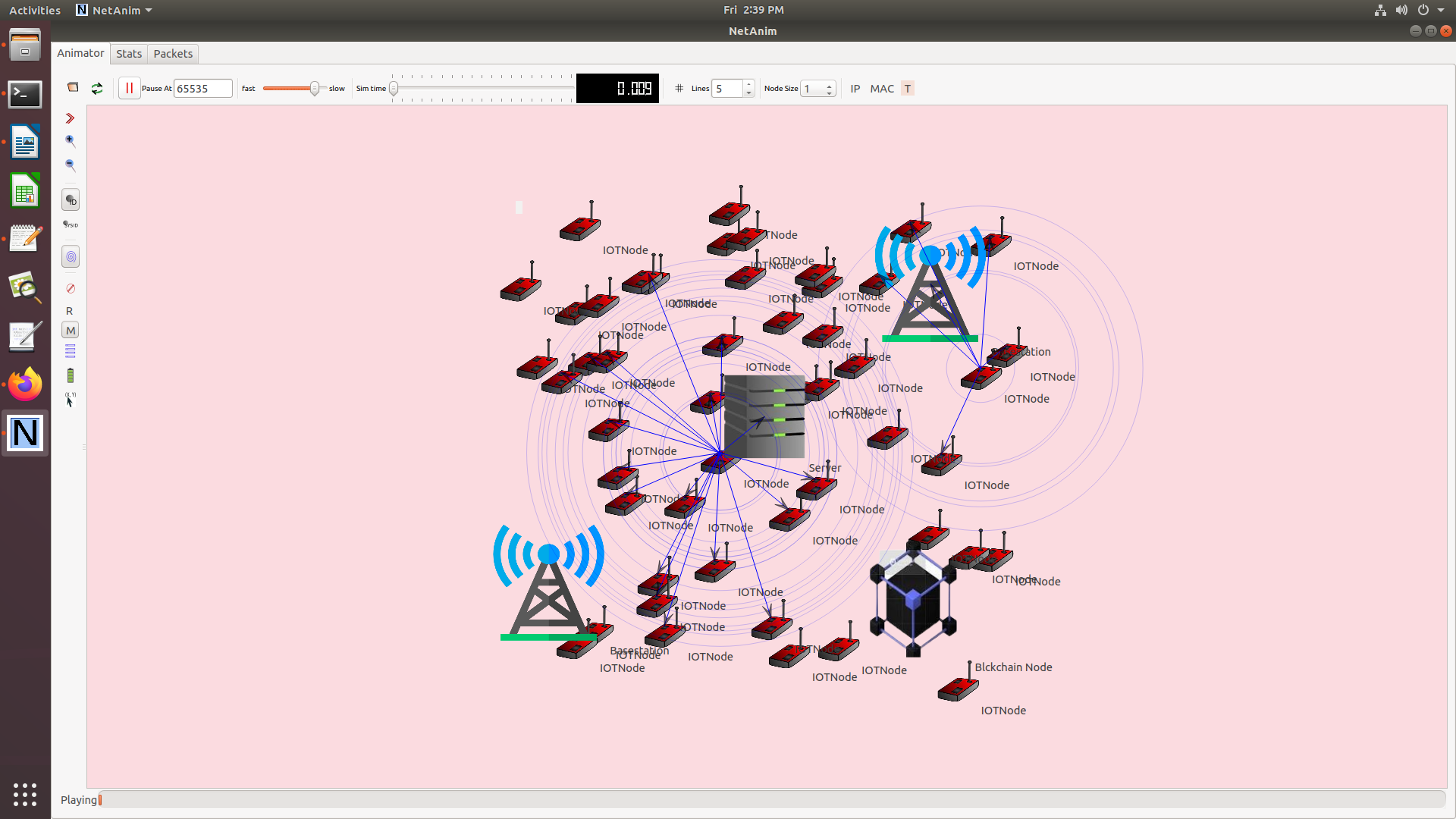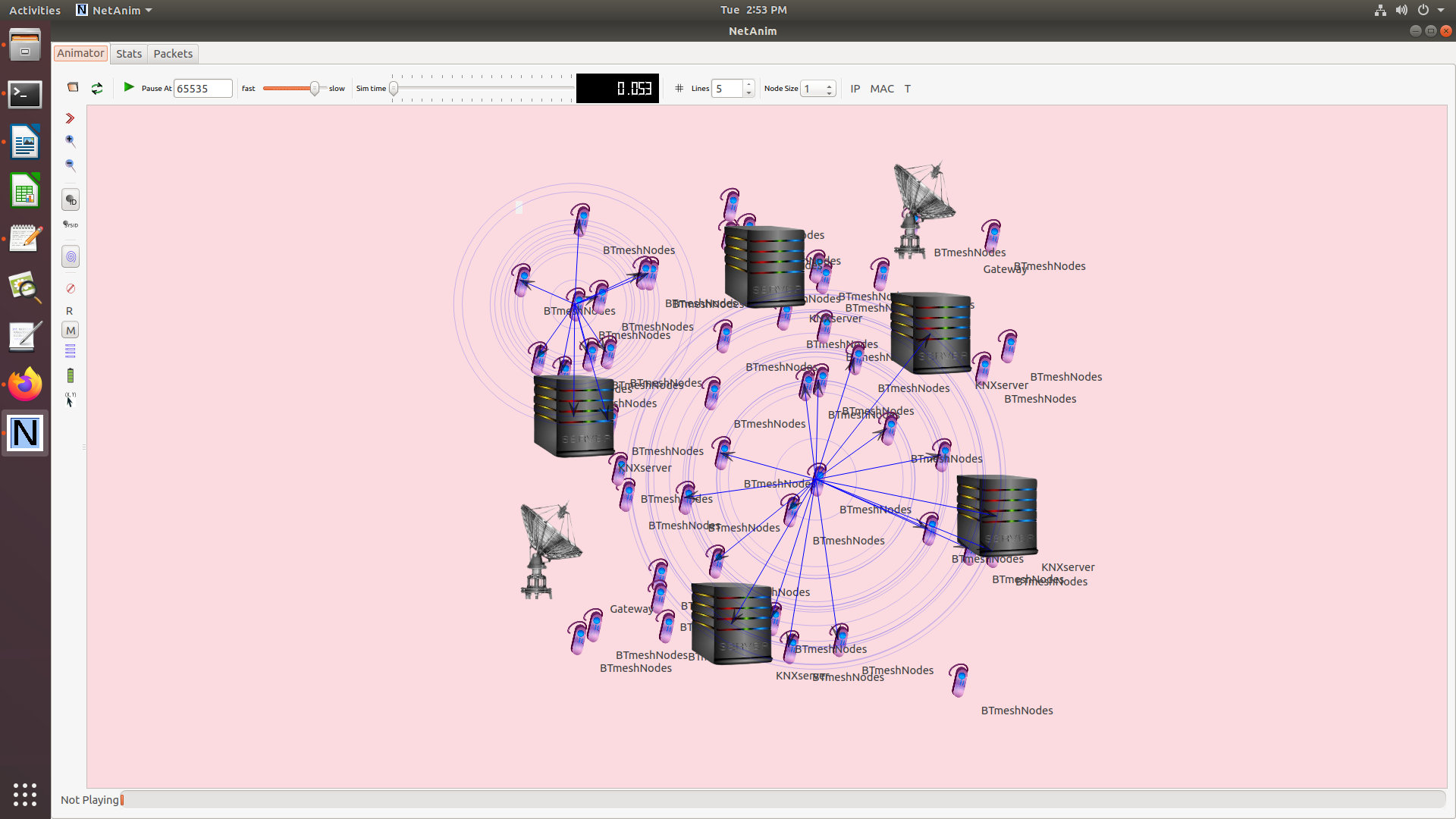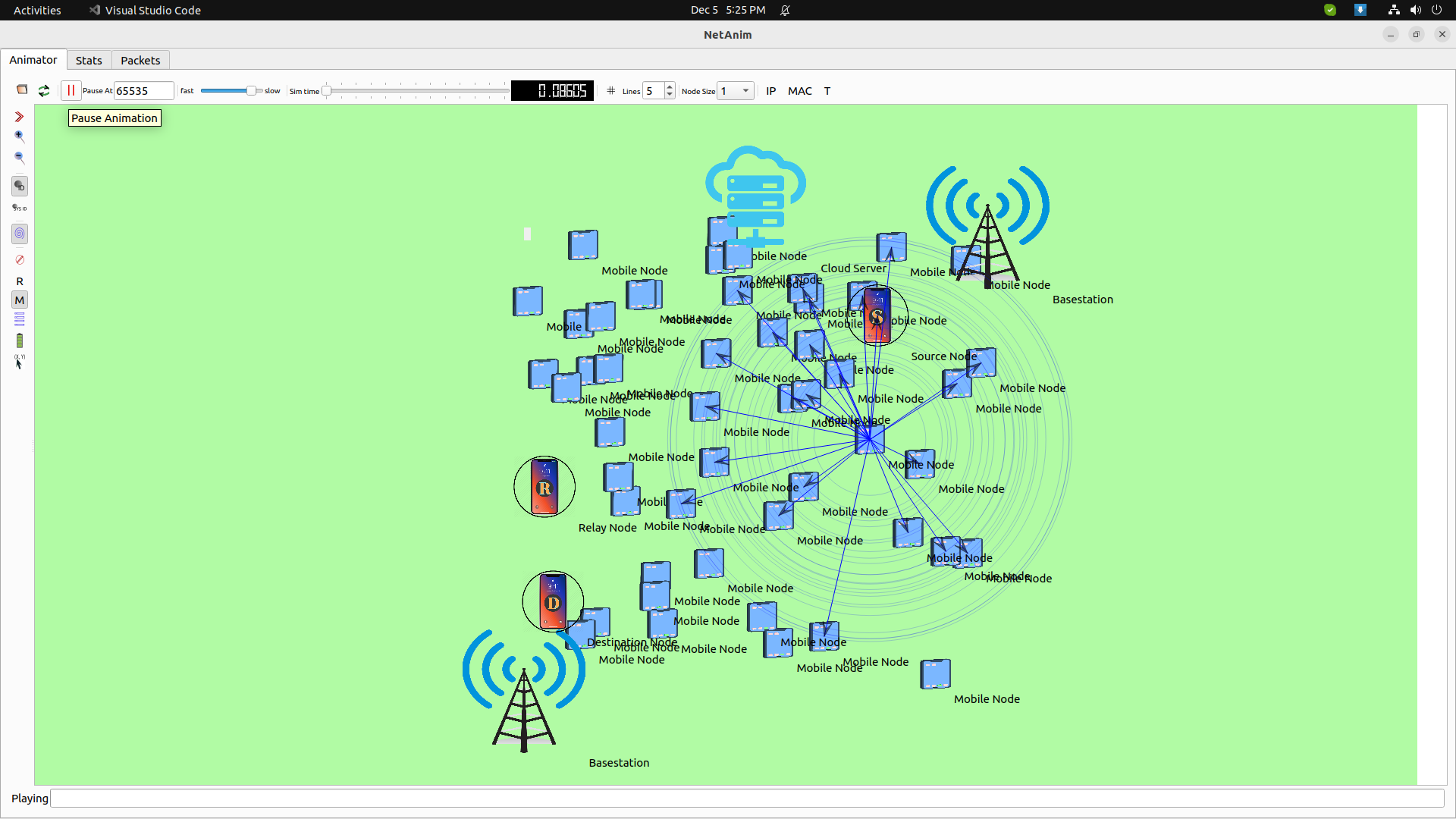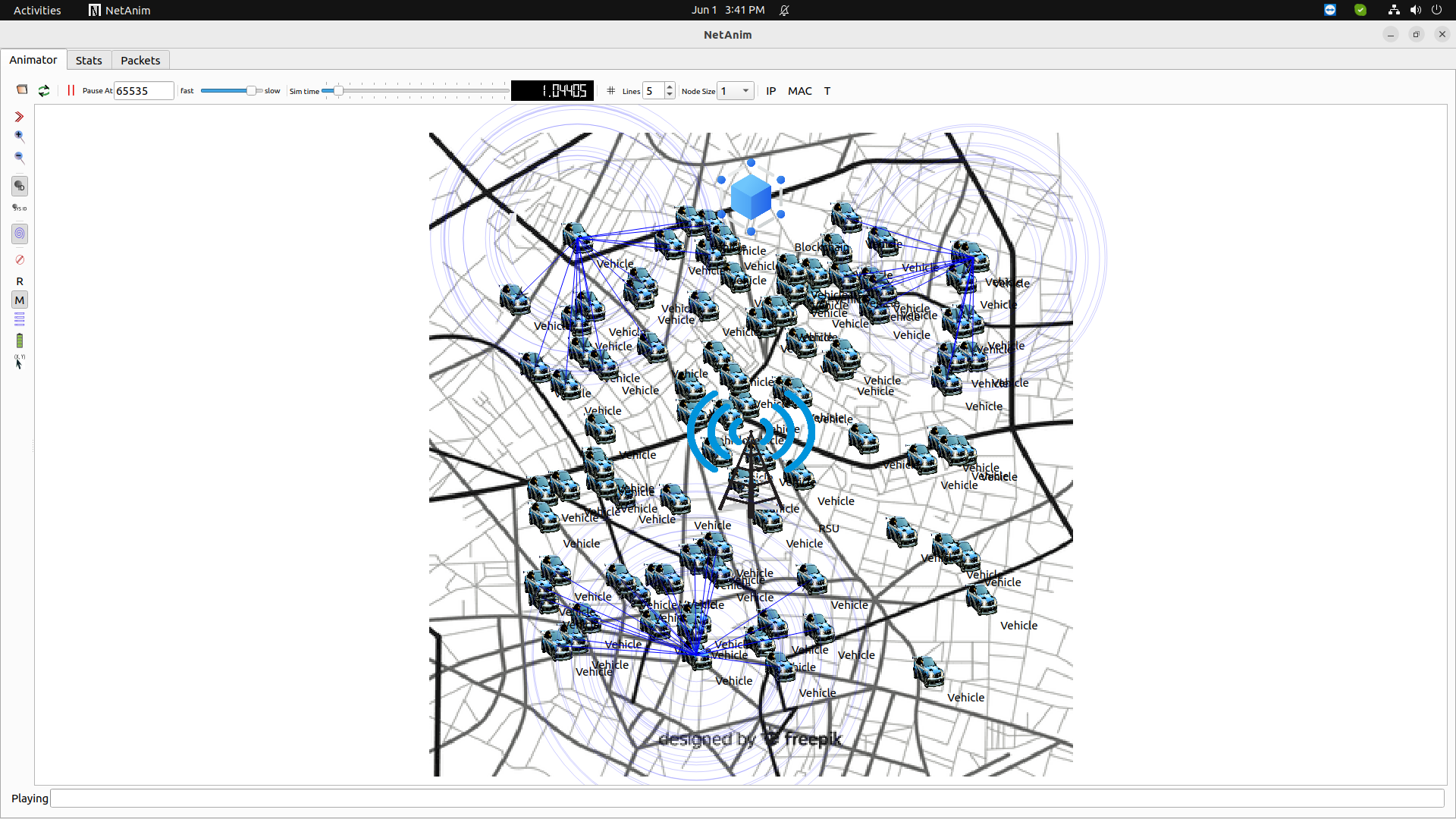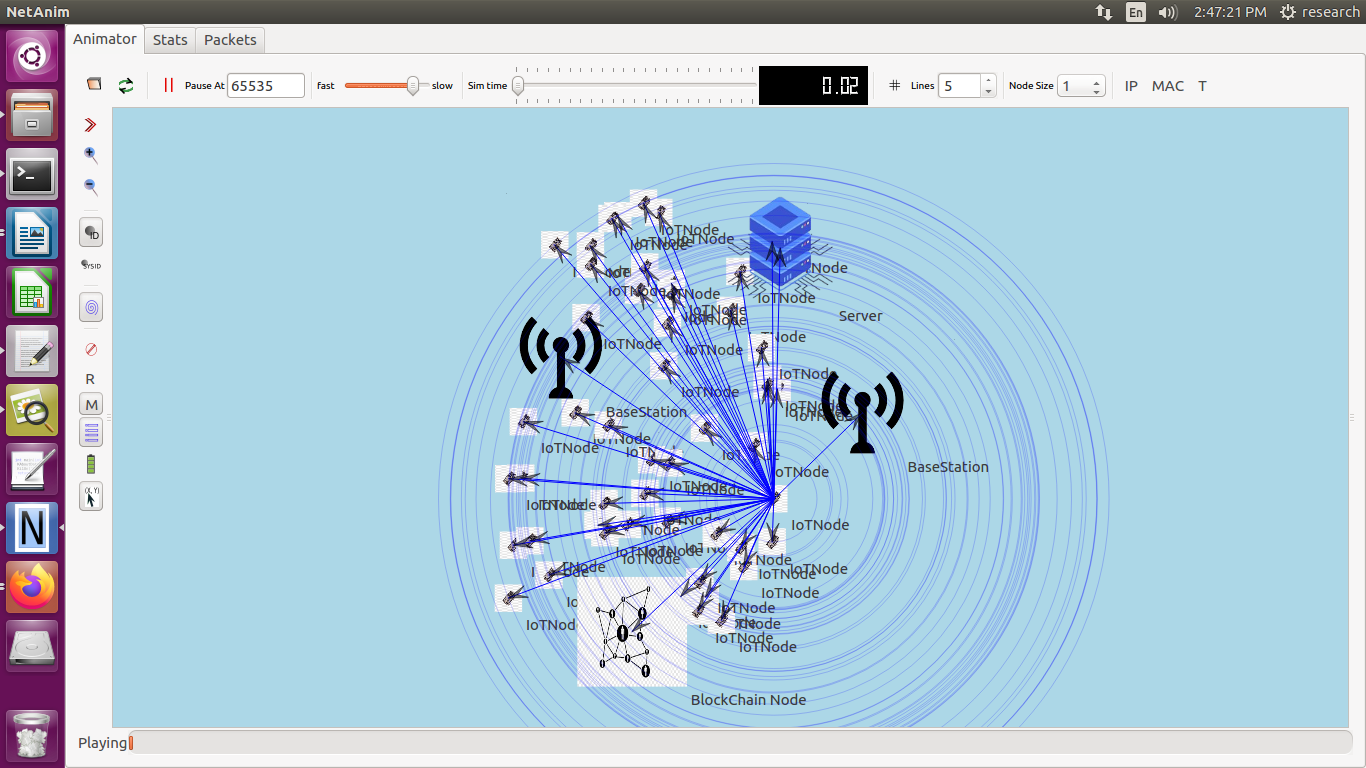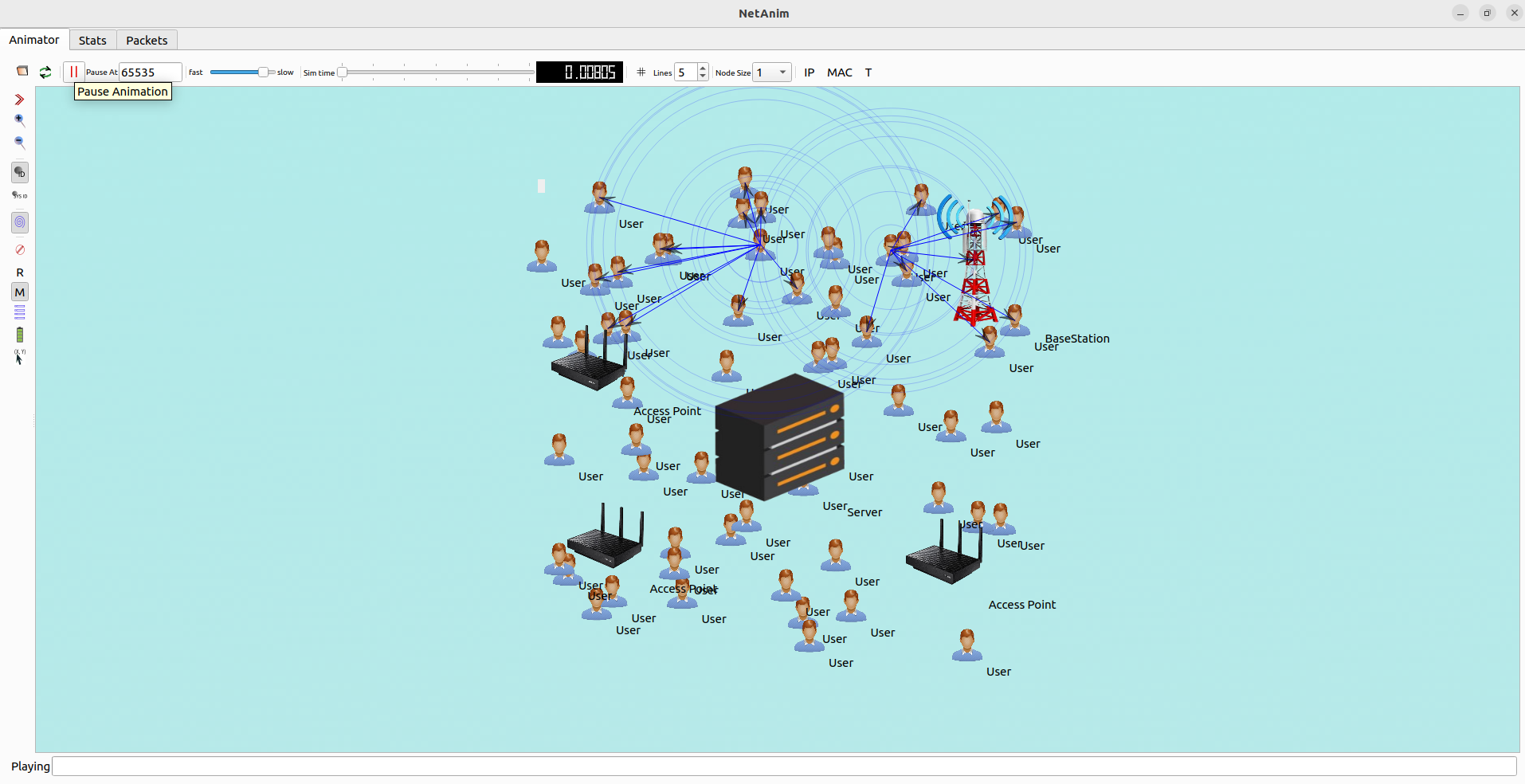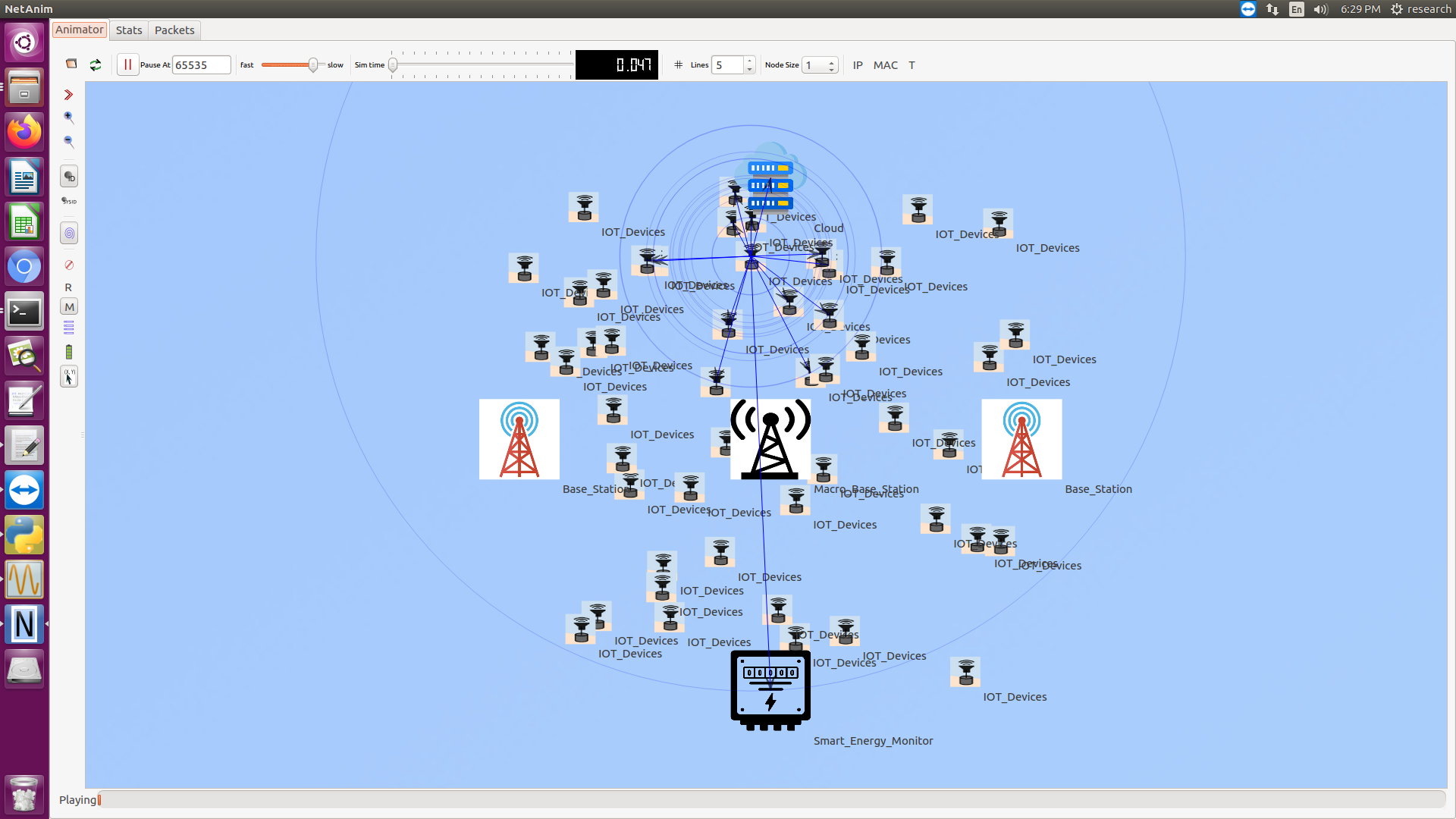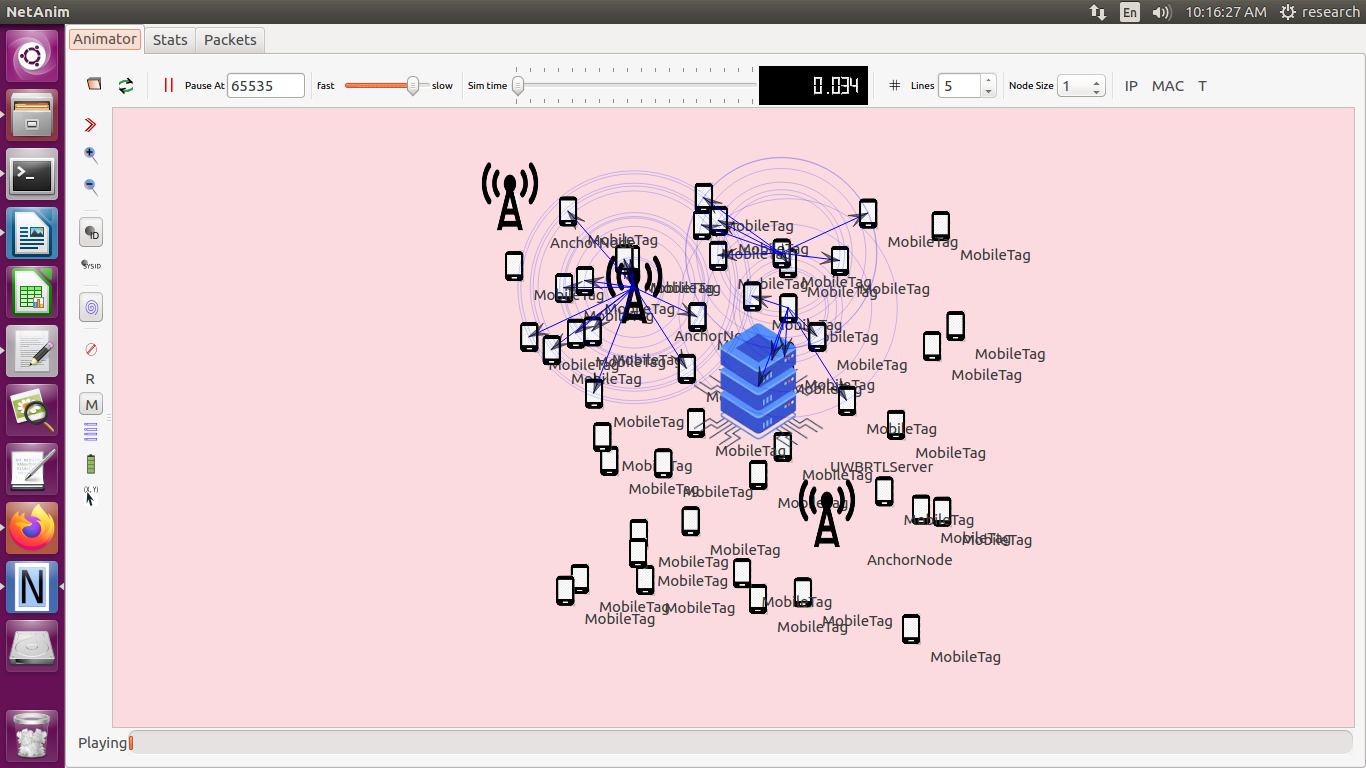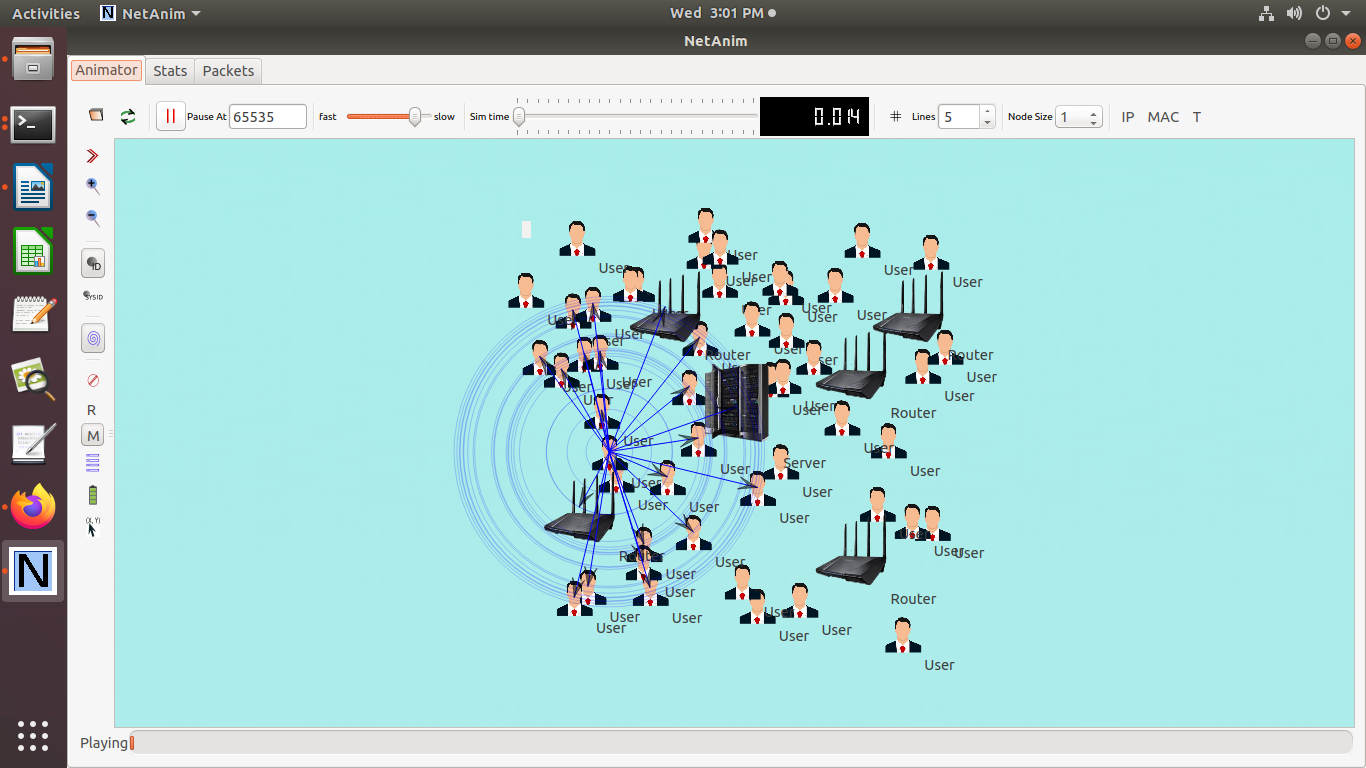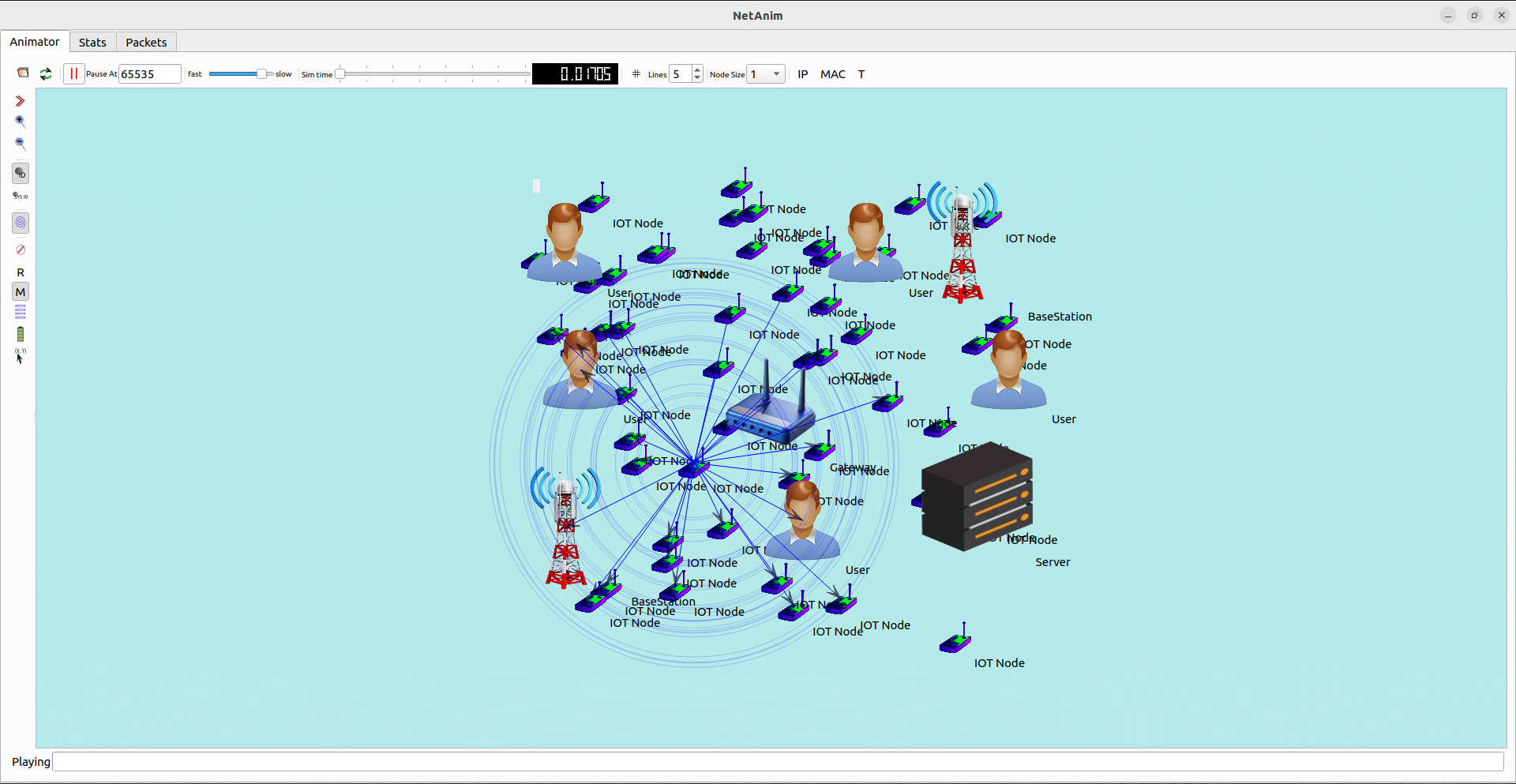
To implement the wireless security in ns3 has needs to emulate the secure communication among wireless nodes, like access points, clients, and possibly an attacker. The security mechanisms can contains encryption, authentication, and intrusion detection. The given below are the detailed procedures on how to implement the wireless security in ns3:
Step-by-Step Implementation:
Step 1: Set Up the ns3 Environment
Make certain ns3 is installed in the system.
Step 2: Define the Network Topology
Generate a network topology that contains nodes denotes wireless clients, access points (APs), and possibly an attacker.
#include “ns3/core-module.h”
#include “ns3/network-module.h”
#include “ns3/internet-module.h”
#include “ns3/wifi-module.h”
#include “ns3/mobility-module.h”
#include “ns3/applications-module.h”
using namespace ns3;
NS_LOG_COMPONENT_DEFINE (“WirelessSecurityExample”);
int main (int argc, char *argv[]) {
CommandLine cmd;
cmd.Parse (argc, argv);
// Create nodes
NodeContainer wifiStaNodes;
wifiStaNodes.Create (2); // Wireless clients
NodeContainer wifiApNode;
wifiApNode.Create (1); // Access Point (AP)
NodeContainer attackerNode;
attackerNode.Create (1); // Attacker node
// Set up WiFi PHY and channel
YansWifiChannelHelper channel = YansWifiChannelHelper::Default ();
YansWifiPhyHelper phy = YansWifiPhyHelper::Default ();
phy.SetChannel (channel.Create ());
// Set up WiFi MAC
WifiHelper wifi;
wifi.SetStandard (WIFI_STANDARD_80211ac);
WifiMacHelper mac;
Ssid ssid = Ssid (“ns-3-ssid”);
// Configure the AP
mac.SetType (“ns3::ApWifiMac”,
“Ssid”, SsidValue (ssid));
NetDeviceContainer apDevice;
apDevice = wifi.Install (phy, mac, wifiApNode);
// Configure the STA
mac.SetType (“ns3::StaWifiMac”,
“Ssid”, SsidValue (ssid),
“ActiveProbing”, BooleanValue (false));
NetDeviceContainer staDevices;
staDevices = wifi.Install (phy, mac, wifiStaNodes);
// Configure attacker as a station
NetDeviceContainer attackerDevice;
attackerDevice = wifi.Install (phy, mac, attackerNode);
// Set up mobility
MobilityHelper mobility;
mobility.SetMobilityModel (“ns3::ConstantPositionMobilityModel”);
mobility.Install (wifiStaNodes);
mobility.Install (wifiApNode);
mobility.Install (attackerNode);
// Install the internet stack
InternetStackHelper stack;
stack.Install (wifiStaNodes);
stack.Install (wifiApNode);
stack.Install (attackerNode);
// Assign IP addresses
Ipv4AddressHelper address;
address.SetBase (“10.1.1.0”, “255.255.255.0”);
Ipv4InterfaceContainer staInterfaces;
staInterfaces = address.Assign (staDevices);
Ipv4InterfaceContainer apInterface;
apInterface = address.Assign (apDevice);
Ipv4InterfaceContainer attackerInterface;
attackerInterface = address.Assign (attackerDevice);
// Create and configure applications…
Simulator::Run ();
Simulator::Destroy ();
return 0;
}
Step 3: Simulate Communication
Create applications to simulate communication between wireless clients and the AP.
Client Application:
class ClientApplication : public Application {
public:
ClientApplication () : m_socket (0) {}
virtual ~ClientApplication () {}
protected:
virtual void StartApplication () {
m_socket = Socket::CreateSocket (GetNode (), UdpSocketFactory::GetTypeId ());
InetSocketAddress local = InetSocketAddress (Ipv4Address::GetAny (), 8080);
m_socket->Bind (local);
m_socket->SetRecvCallback (MakeCallback (&ClientApplication::HandleRead, this));
Simulator::Schedule (Seconds (2.0), &ClientApplication::SendData, this);
}
virtual void StopApplication () {
if (m_socket) {
m_socket->Close ();
m_socket = 0;
}
}
private:
void SendData () {
Ptr<Packet> packet = Create<Packet> ((uint8_t*)”client-data”, 11);
m_socket->SendTo (packet, 0, InetSocketAddress (Ipv4Address (“10.1.1.1”), 8080)); // Send to AP
Simulator::Schedule (Seconds (5.0), &ClientApplication::SendData, this);
}
void HandleRead (Ptr<Socket> socket) {
Ptr<Packet> packet;
Address from;
while ((packet = socket->RecvFrom (from))) {
NS_LOG_INFO (“Client received: ” << packet->GetSize ());
}
}
Ptr<Socket> m_socket;
};
Access Point Application:
class AccessPointApplication : public Application {
public:
AccessPointApplication () : m_socket (0) {}
virtual ~AccessPointApplication () {}
protected:
virtual void StartApplication () {
m_socket = Socket::CreateSocket (GetNode (), UdpSocketFactory::GetTypeId ());
InetSocketAddress local = InetSocketAddress (Ipv4Address::GetAny (), 8080);
m_socket->Bind (local);
m_socket->SetRecvCallback (MakeCallback (&AccessPointApplication::HandleRead, this));
}
virtual void StopApplication () {
if (m_socket) {
m_socket->Close ();
m_socket = 0;
}
}
private:
void HandleRead (Ptr<Socket> socket) {
Ptr<Packet> packet;
Address from;
while ((packet = socket->RecvFrom (from))) {
NS_LOG_INFO (“AP received: ” << packet->GetSize ());
// Process data and respond if necessary
std::string responseData = “processed-data”;
Ptr<Packet> responsePacket = Create<Packet> ((uint8_t*)responseData.c_str (), responseData.size ());
m_socket->SendTo (responsePacket, 0, InetSocketAddress::ConvertFrom (from));
}
}
Ptr<Socket> m_socket;
};
Step 4: Implement Security Mechanisms
Simulate security mechanisms such as encryption, authentication, and intrusion detection.
Authentication:
class AuthApplication : public Application {
public:
AuthApplication () : m_socket (0) {}
virtual ~AuthApplication () {}
protected:
virtual void StartApplication () {
m_socket = Socket::CreateSocket (GetNode (), UdpSocketFactory::GetTypeId ());
InetSocketAddress local = InetSocketAddress (Ipv4Address::GetAny (), 7070);
m_socket->Bind (local);
m_socket->SetRecvCallback (MakeCallback (&AuthApplication::HandleRead, this));
}
virtual void StopApplication () {
if (m_socket) {
m_socket->Close ();
m_socket = 0;
}
}
private:
void HandleRead (Ptr<Socket> socket) {
Ptr<Packet> packet;
Address from;
while ((packet = socket->RecvFrom (from))) {
std::string data = std::string ((char*) packet->PeekData ());
if (Authenticate (data)) {
NS_LOG_INFO (“Authentication successful from”<< InetSocketAddress::ConvertFrom (from).GetIpv4 ());
ForwardPacket (packet);
} else {
NS_LOG_WARN (“Authentication failed from” << InetSocketAddress::ConvertFrom (from).GetIpv4 ());
}
}
}
bool Authenticate (const std::string& data) {
// Simplified authentication logic
return data == “valid-credentials”;
}
void ForwardPacket (Ptr<Packet> packet) {
Ptr<Socket> socket = Socket::CreateSocket (GetNode (), UdpSocketFactory::GetTypeId ());
InetSocketAddress remote = InetSocketAddress (Ipv4Address (“10.1.1.1”), 8080); // Forward to another node
socket->Connect (remote);
socket->Send (packet);
socket->Close ();
}
Ptr<Socket> m_socket;
};
Encryption:
class EncryptionApplication : public Application {
public:
EncryptionApplication () : m_socket (0) {}
virtual ~EncryptionApplication () {}
protected:
virtual void StartApplication () {
m_socket = Socket::CreateSocket (GetNode (), UdpSocketFactory::GetTypeId ());
InetSocketAddress local = InetSocketAddress (Ipv4Address::GetAny (), 6060);
m_socket->Bind (local);
m_socket->SetRecvCallback (MakeCallback (&EncryptionApplication::HandleRead, this));
}
virtual void StopApplication () {
if (m_socket) {
m_socket->Close ();
m_socket = 0;
}
}
private:
void HandleRead (Ptr<Socket> socket) {
Ptr<Packet> packet;
Address from;
while ((packet = socket->RecvFrom (from))) {
std::string data = std::string ((char*) packet->PeekData ());
std::string decryptedData = Decrypt (data);
NS_LOG_INFO (“Received encrypted data: ” << data << “, decrypted data: ” << decryptedData);
}
}
std::string Decrypt (const std::string& data) {
// Simplified decryption logic
return data; // Assume data is already decrypted for simplicity
}
Ptr<Socket> m_socket;
};
Intrusion Detection System (IDS):
class IDSApplication : public Application {
public:
IDSApplication () : m_socket (0) {}
virtual ~IDSApplication () {}
protected:
virtual void StartApplication () {
m_socket = Socket::CreateSocket (GetNode (), UdpSocketFactory::GetTypeId ());
InetSocketAddress local = InetSocketAddress (Ipv4Address::GetAny (), 5050);
m_socket->Bind (local);
m_socket->SetRecvCallback (MakeCallback (&IDSApplication::HandleRead, this));
}
virtual void StopApplication () {
if (m_socket) {
m_socket->Close ();
m_socket = 0;
}
}
private:
void HandleRead (Ptr<Socket> socket) {
Ptr<Packet> packet;
Address from;
while ((packet = socket->RecvFrom (from))) {
std::string data = std::string ((char*) packet->PeekData ());
if (DetectIntrusion (data)) {
NS_LOG_WARN (“Intrusion detected from ” << InetSocketAddress::ConvertFrom (from).GetIpv4 ());
} else {
NS_LOG_INFO (“Normal traffic from ” << InetSocketAddress::ConvertFrom (from).GetIpv4 ());
}
}
}
bool DetectIntrusion (const std::string& data) {
// Simplified intrusion detection logic
return data == “malicious-pattern”;
}
Ptr<Socket> m_socket;
};
Step 5: Deploy Applications
Instantiate and deploy the applications on the appropriate nodes in your network:
int main (int argc, char *argv[]) {
CommandLine cmd;
cmd.Parse (argc, argv);
// Create nodes
NodeContainer wifiStaNodes;
wifiStaNodes.Create (2); // Wireless clients
NodeContainer wifiApNode;
wifiApNode.Create (1); // Access Point (AP)
NodeContainer attackerNode;
attackerNode.Create (1); // Attacker node
// Set up WiFi PHY and channel
YansWifiChannelHelper channel = YansWifiChannelHelper::Default ();
YansWifiPhyHelper phy = YansWifiPhyHelper::Default ();
phy.SetChannel (channel.Create ());
// Set up WiFi MAC
WifiHelper wifi;
wifi.SetStandard (WIFI_STANDARD_80211ac);
WifiMacHelper mac;
Ssid ssid = Ssid (“ns-3-ssid”);
// Configure the AP
mac.SetType (“ns3::ApWifiMac”,
“Ssid”, SsidValue (ssid));
NetDeviceContainer apDevice;
apDevice = wifi.Install (phy, mac, wifiApNode);
// Configure the STA
mac.SetType (“ns3::StaWifiMac”,
“Ssid”, SsidValue (ssid),
“ActiveProbing”, BooleanValue (false));
NetDeviceContainer staDevices;
staDevices = wifi.Install (phy, mac, wifiStaNodes);
// Configure attacker as a station
NetDeviceContainer attackerDevice;
attackerDevice = wifi.Install (phy, mac, attackerNode);
// Set up mobility
MobilityHelper mobility;
mobility.SetMobilityModel (“ns3::ConstantPositionMobilityModel”);
mobility.Install (wifiStaNodes);
mobility.Install (wifiApNode);
mobility.Install (attackerNode);
// Install the internet stack
InternetStackHelper stack;
stack.Install (wifiStaNodes);
stack.Install (wifiApNode);
stack.Install (attackerNode);
// Assign IP addresses
Ipv4AddressHelper address;
address.SetBase (“10.1.1.0”, “255.255.255.0”);
Ipv4InterfaceContainer staInterfaces;
staInterfaces = address.Assign (staDevices);
Ipv4InterfaceContainer apInterface;
apInterface = address.Assign (apDevice);
Ipv4InterfaceContainer attackerInterface;
attackerInterface = address.Assign (attackerDevice);
// Create and configure the Client application
for (uint32_t i = 0; i < wifiStaNodes.GetN (); ++i) {
Ptr<ClientApplication> clientApp = CreateObject<ClientApplication> ();
wifiStaNodes.Get (i)->AddApplication (clientApp);
clientApp->SetStartTime (Seconds (1.0));
clientApp->SetStopTime (Seconds (20.0));
}
// Create and configure the AP application
Ptr<AccessPointApplication> apApp = CreateObject<AccessPointApplication> ();
wifiApNode.Get (0)->AddApplication (apApp);
apApp->SetStartTime (Seconds (1.0));
apApp->SetStopTime (Seconds (20.0));
// Create and configure the Auth application
Ptr<AuthApplication> authApp = CreateObject<AuthApplication> ();
wifiApNode.Get (0)->AddApplication (authApp);
authApp->SetStartTime (Seconds (1.0));
authApp->SetStopTime (Seconds (20.0));
// Create and configure the Encryption application
Ptr<EncryptionApplication> encryptionApp = CreateObject<EncryptionApplication> ();
wifiApNode.Get (0)->AddApplication (encryptionApp);
encryptionApp->SetStartTime (Seconds (1.0));
encryptionApp->SetStopTime (Seconds (20.0));
// Create and configure the IDS application
Ptr<IDSApplication> idsApp = CreateObject<IDSApplication> ();
wifiApNode.Get (0)->AddApplication (idsApp);
idsApp->SetStartTime (Seconds (1.0));
idsApp->SetStopTime (Seconds (20.0));
Simulator::Run ();
Simulator::Destroy ();
return 0;
}
Step 6: Simulate an Attack
To test the security mechanisms, simulate an attack from the attacker node:
class AttackerApplication : public Application {
public:
AttackerApplication () : m_socket (0) {}
virtual ~AttackerApplication () {}
protected:
virtual void StartApplication () {
m_socket = Socket::CreateSocket (GetNode (), UdpSocketFactory::GetTypeId ());
m_peer = InetSocketAddress (Ipv4Address (“10.1.1.1”), 8080); // Target AP
m_socket->Connect (m_peer);
Simulator::Schedule (Seconds (3.0), &AttackerApplication::SendMaliciousPacket, this);
}
virtual void StopApplication () {
if (m_socket) {
m_socket->Close ();
m_socket = 0;
}
}
private:
void SendMaliciousPacket () {
std::string maliciousData = “malicious-pattern”; // Simplified malicious pattern
Ptr<Packet> packet = Create<Packet> ((uint8_t*)maliciousData.c_str (), maliciousData.size ());
m_socket->Send (packet);
}
Ptr<Socket> m_socket;
Address m_peer;
};
int main (int argc, char *argv[]) {
CommandLine cmd;
cmd.Parse (argc, argv);
// Create nodes
NodeContainer wifiStaNodes;
wifiStaNodes.Create (2); // Wireless clients
NodeContainer wifiApNode;
wifiApNode.Create (1); // Access Point (AP)
NodeContainer attackerNode;
attackerNode.Create (1); // Attacker node
// Set up WiFi PHY and channel
YansWifiChannelHelper channel = YansWifiChannelHelper::Default ();
YansWifiPhyHelper phy = YansWifiPhyHelper::Default ();
phy.SetChannel (channel.Create ());
// Set up WiFi MAC
WifiHelper wifi;
wifi.SetStandard (WIFI_STANDARD_80211ac);
WifiMacHelper mac;
Ssid ssid = Ssid (“ns-3-ssid”);
// Configure the AP
mac.SetType (“ns3::ApWifiMac”,
“Ssid”, SsidValue (ssid));
NetDeviceContainer apDevice;
apDevice = wifi.Install (phy, mac, wifiApNode);
// Configure the STA
mac.SetType (“ns3::StaWifiMac”,
“Ssid”, SsidValue (ssid),
“ActiveProbing”, BooleanValue (false));
NetDeviceContainer staDevices;
staDevices = wifi.Install (phy, mac, wifiStaNodes);
// Configure attacker as a station
NetDeviceContainer attackerDevice;
attackerDevice = wifi.Install (phy, mac, attackerNode);
// Set up mobility
MobilityHelper mobility;
mobility.SetMobilityModel (“ns3::ConstantPositionMobilityModel”);
mobility.Install (wifiStaNodes);
mobility.Install (wifiApNode);
mobility.Install (attackerNode);
// Install the internet stack
InternetStackHelper stack;
stack.Install (wifiStaNodes);
stack.Install (wifiApNode);
stack.Install (attackerNode);
// Assign IP addresses
Ipv4AddressHelper address;
address.SetBase (“10.1.1.0”, “255.255.255.0”);
Ipv4InterfaceContainer staInterfaces;
staInterfaces = address.Assign (staDevices);
Ipv4InterfaceContainer apInterface;
apInterface = address.Assign (apDevice);
Ipv4InterfaceContainer attackerInterface;
attackerInterface = address.Assign (attackerDevice);
// Create and configure the Client application
for (uint32_t i = 0; i < wifiStaNodes.GetN (); ++i) {
Ptr<ClientApplication> clientApp = CreateObject<ClientApplication> ();
wifiStaNodes.Get (i)->AddApplication (clientApp);
clientApp->SetStartTime (Seconds (1.0));
clientApp->SetStopTime (Seconds (20.0));
}
// Create and configure the AP application
Ptr<AccessPointApplication> apApp = CreateObject<AccessPointApplication> ();
wifiApNode.Get (0)->AddApplication (apApp);
apApp->SetStartTime (Seconds (1.0));
apApp->SetStopTime (Seconds (20.0));
// Create and configure the Auth application
Ptr<AuthApplication> authApp = CreateObject<AuthApplication> ();
wifiApNode.Get (0)->AddApplication (authApp);
authApp->SetStartTime (Seconds (1.0));
authApp->SetStopTime (Seconds (20.0));
// Create and configure the Encryption application
Ptr<EncryptionApplication> encryptionApp = CreateObject<EncryptionApplication> ();
wifiApNode.Get (0)->AddApplication (encryptionApp);
encryptionApp->SetStartTime (Seconds (1.0));
encryptionApp->SetStopTime (Seconds (20.0));
// Create and configure the IDS application
Ptr<IDSApplication> idsApp = CreateObject<IDSApplication> ();
wifiApNode.Get (0)->AddApplication (idsApp);
idsApp->SetStartTime (Seconds (1.0));
idsApp->SetStopTime (Seconds (20.0));
// Create and configure the Attacker application
Ptr<AttackerApplication> attackerApp = CreateObject<AttackerApplication> ();
attackerNode.Get (0)->AddApplication (attackerApp);
attackerApp->SetStartTime (Seconds (3.0));
attackerApp->SetStopTime (Seconds (4.0));
Simulator::Run ();
Simulator::Destroy ();
return 0;
}
Finally, we had implemented a wireless security in ns3 detailed manner. We also provide related information about wireless security how it adjust and perform in diverse scenarios.
We offer help with implementing Wireless Security in the ns3 program. Our developers are ready to offer comparative analysis support in this field, so please provide all pertinent project details for assistance. Additionally, gather insightful topic ideas from our developers on this subject.