Thesis Topics for Network Security

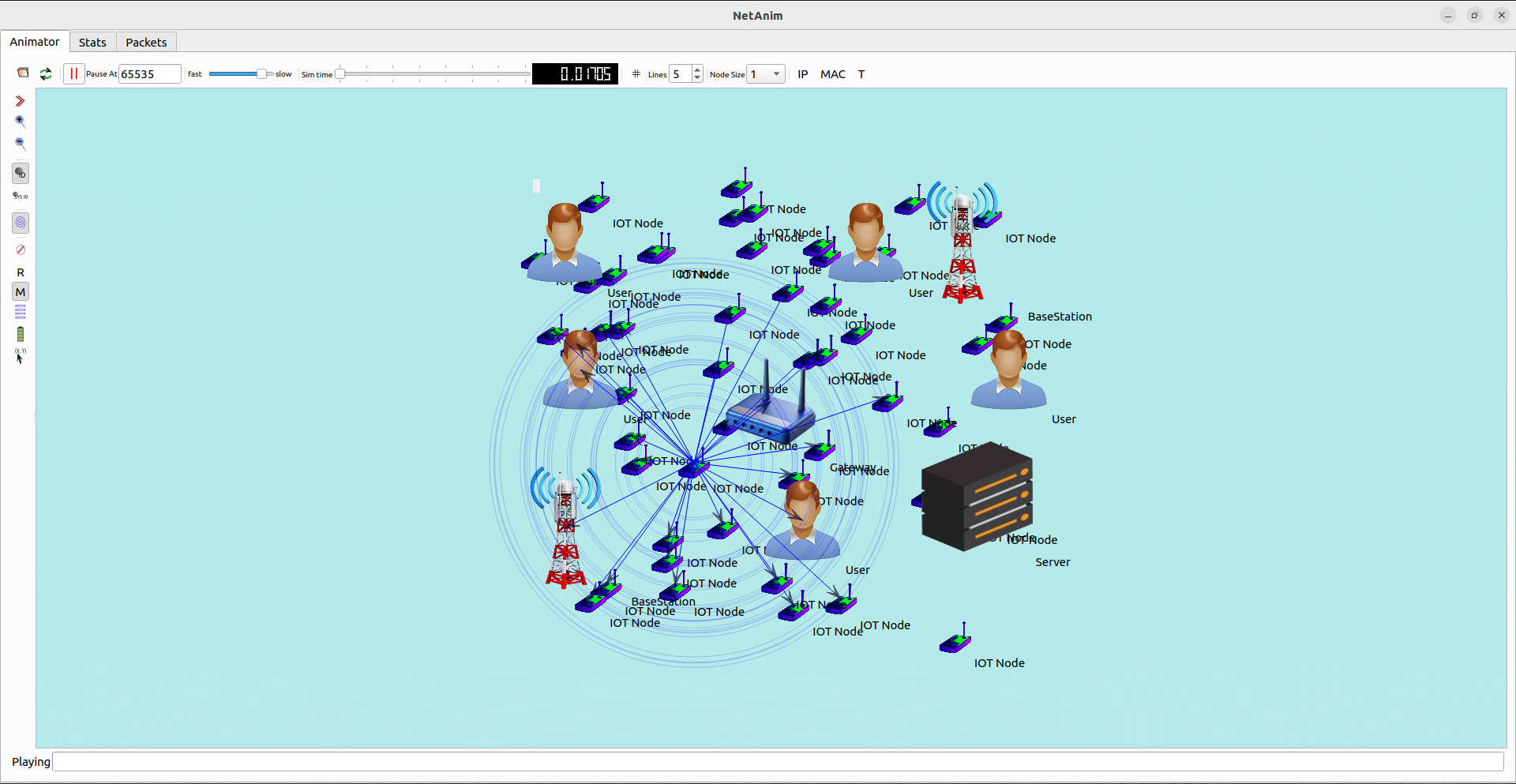
Thesis Topics for Network Security based upon current trends and scholars’ interest are shared below, contact ns3simulation.com we have gained global scholars attention through our work. An open-source, discrete-event network simulation tool is Network Simulator 3 (NS3). Network security is defined as the process of protecting the network from illicit access, cyberattacks. We suggest numerous intriguing thesis topics for network security through the utilization of NS-3 simulation:

  1. Evaluating the Effectiveness of Intrusion Detection Systems in High-Speed Networks
  • Goal: As a means to simulate high-speed network platforms, it is beneficial to employ NS-3. On the basis of resource utilization, precision, and false positives/negatives, we plan to assess the functionality of various arrangements of Intrusion Detection Systems (IDS).
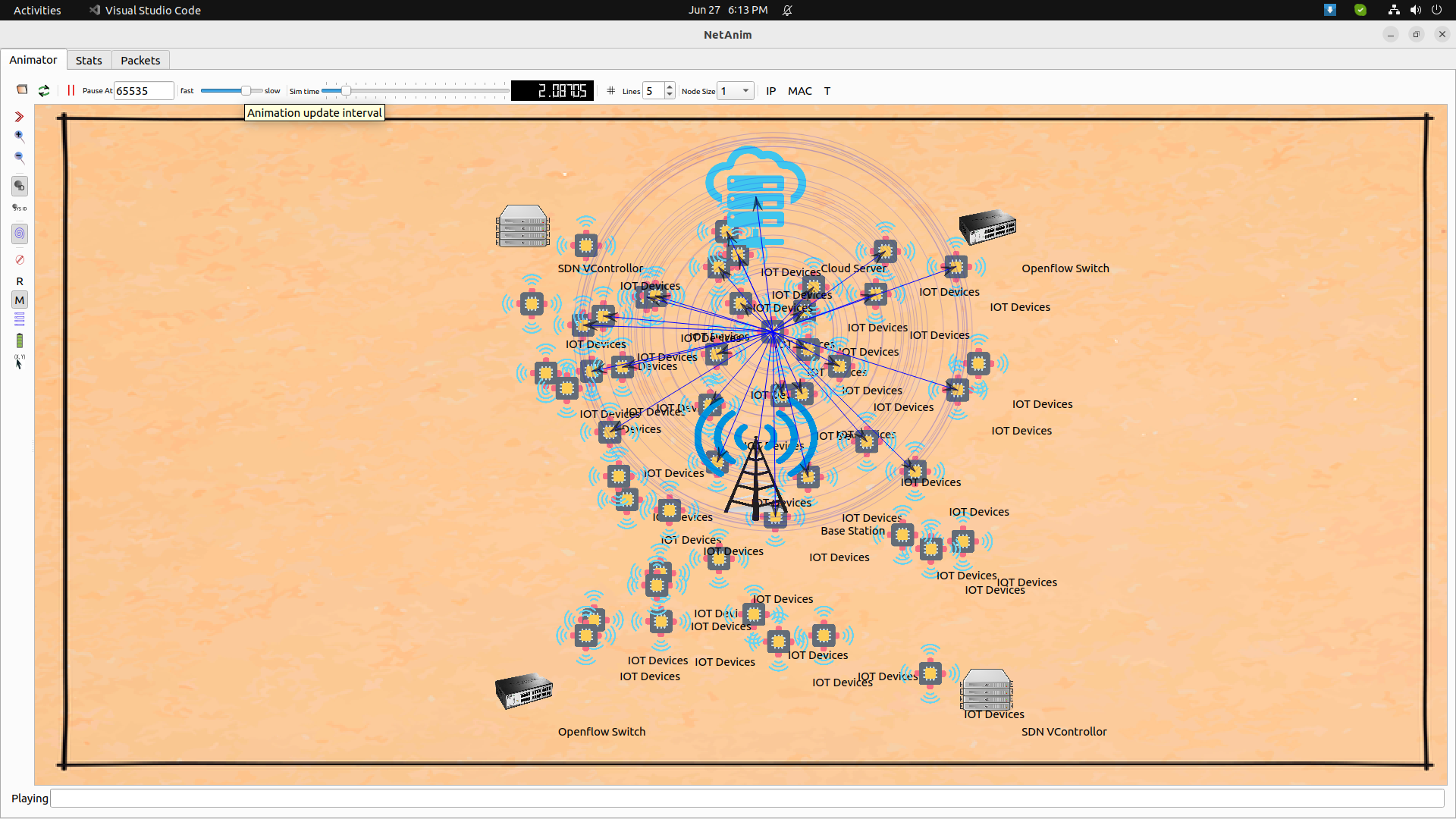
  1. Simulation of DDoS Attacks and Mitigation Techniques on IoT Networks
  • Goal: Generally, to investigate the influence of Distributed Denial of Service (DDoS) assaults and the performance of different reduction approaches such as traffic filtering and rate limiting, our team focuses on designing IoT networks with the support of NS-3.
  1. Assessing the Security of SDN-Controlled Networks
  • Goal: Within the SDN control plane and data plane, explore possible safety susceptibilities by simulating Software-Defined Networking (SDN) infrastructures through the utilization of NS-3. Specifically, effective solutions ought to be assessed.
  1. Performance and Security Analysis of Quantum Key Distribution (QKD) Protocols
  • Goal: Across networked models, focus on simulating quantum key distribution protocols by means of employing NS-3. In opposition to eavesdropping assaults, we plan to investigate their effectiveness on the basis of safety, throughput, and latency in an extensive manner.
  1. Wireless Network Security: Evaluating WPA3’s Effectiveness Against Common Attacks
  • Goal: Through the utilization of NS-3, it is appreciable to simulate platforms in an efficient manner. In opposition to different assaults like password cracking and man-in-the-middle (MitM) assaults, our team intends to evaluate the effectiveness of WPA3 safety in wireless networks.
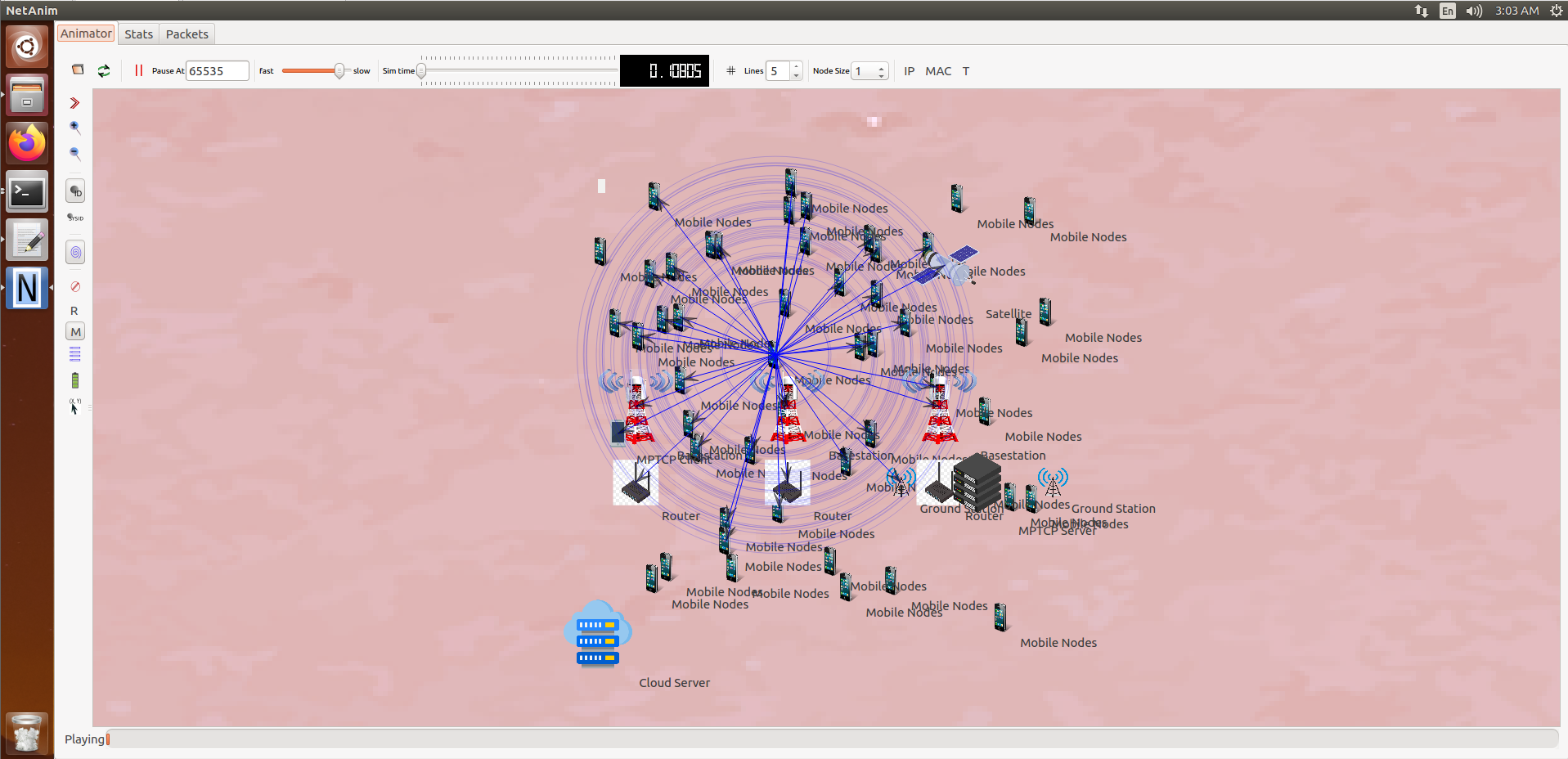
  1. Secure Routing in Mobile Ad Hoc Networks (MANETs)
  • Goal: In order to design MANETs, we aim to employ NS-3. Mainly, to secure in opposition to attacks like blackhole, wormhole, and spoofing assaults, focus on assessing the protection and effectiveness of routing protocols.
  1. Implementing and Testing New Cryptographic Protocols in Network Communications
  • Goal: By means of employing NS-3, our team plans to simulate the deployment of new cryptographic protocols within network communications. Their influence on network effectiveness and resilience to cryptographic assaults should be evaluated.
  1. Analyzing the Impact of Network Segmentation on Enterprise Security
  • Goal: As a means to investigate in what manner the dissemination of malware and the performance of segregation in incident response are impacted by segmentation, it is advisable to design enterprise network infrastructures with and without segmentation through the utilization of NS-3.
  1. IPv6 Security Features and Vulnerabilities: A Simulation Study
  • Goal: With the support of NS-3, we intend to simulate IPv6 networks. Encompassing the performance of IPv6-specific safety technologies, it is appreciable to investigate the safety improvements and possible susceptibilities that are caused by IPv6.
  1. Machine Learning-Based Anomaly Detection in Network Traffic
  • Goal: Typically, to identify abnormalities in network traffic which might specify cybersecurity attacks, focus on incorporating machine learning methods with NS-3 simulations. Among various network settings, our team aims to assess the performance of methods.
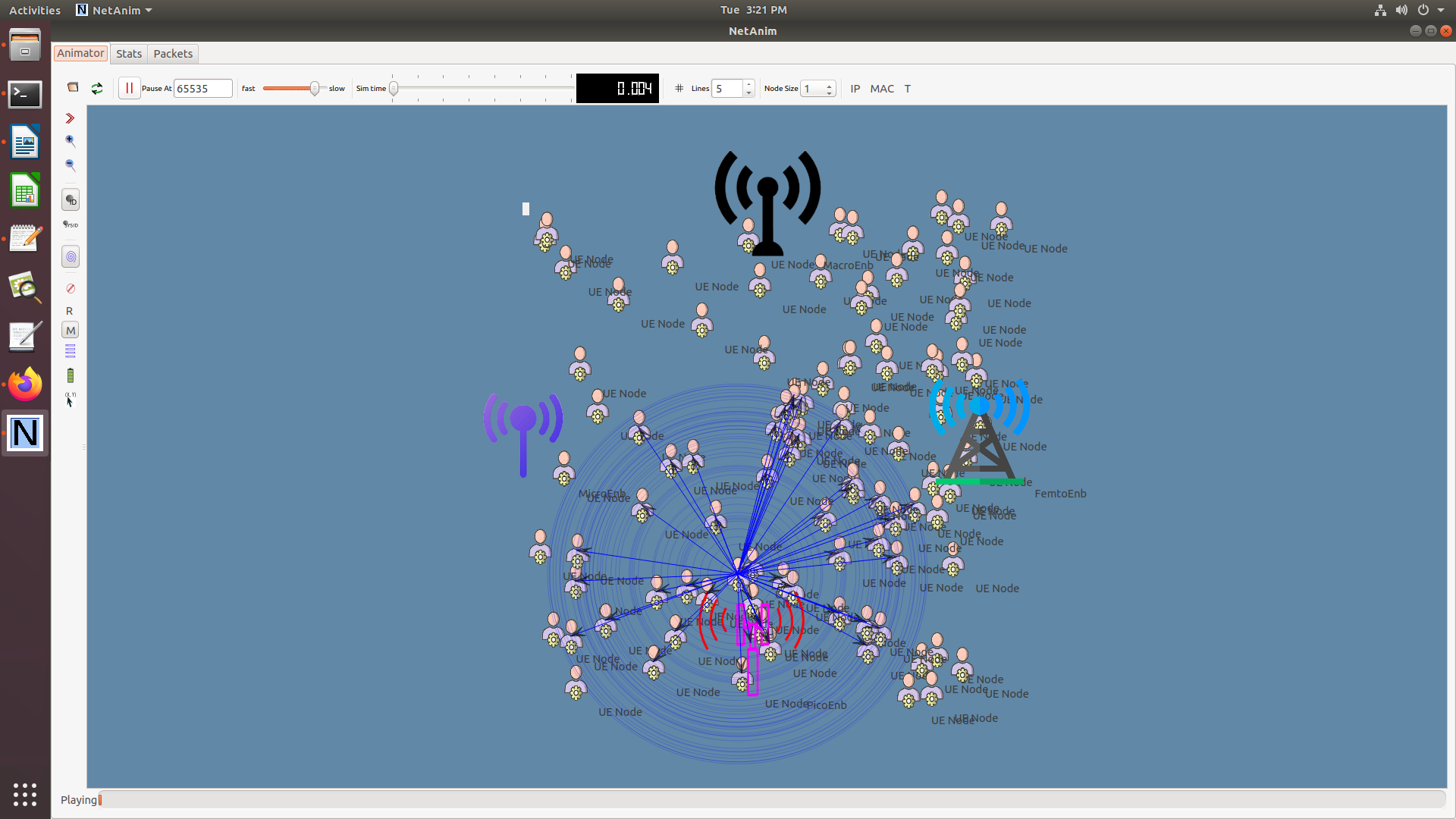
  1. Privacy Preservation in 5G Networks
  • Goal: By means of employing NS-3, we aim to simulate 5G network platforms. In securing user data in opposition to interruption and exploration, it is significant to investigate the performance of confidentiality-preserving approaches and protocols in an extensive manner.

What are some cyber security research ideas for an undergraduate student How can I incorporate Wireshark into my research Thanks in advance everyone

There are several cyber security research ideas progressing continuously in recent years, but some are examined as significant for an undergraduate student. Reflecting on various passions within cybersecurity, we provide many crucial research plans which combine Wireshark:

  1. Analysis of Network Protocols for Security Vulnerabilities
  • Research Plan: For generally employed network protocols such as HTTPS, SSH, HTTP, FTP, seize and examine traffic through the utilization of Wireshark. Generally, possible safety flaws or misarrangements which might be utilized by assaulters, ought to be recognized.
  • Wireshark Application: Mainly, for interpreting protocol activities and recognizing abnormalities or possible safety faults, Wireshark aims to carry out the process of deep packet analysis in an effective manner.
  1. Detecting and Analyzing Malware Traffic
  • Research Plan: Within network traffic, it is advisable to concentrate on recognizing features of malware interaction. To detect usual trends or signs, focus on examining recognized malware samples in a controlled platform.
  • Wireshark Application: Specifically, traffic produced by malware samples could be seized by means of this tool. For detecting malevolent trends and indicators of compromise (IoCs), it is beneficial to employ filtering and analysis tools of Wireshark.
  1. Evaluating Network Security Policies
  • Research Plan: Within a firm or experimental platform, our team intends to evaluate the performance of utilized network security strategies. To track how efficiently loss of data or illicit access are obstructed by strategies, focus on employing Wireshark.
  • Wireshark Application: To validate compliance with safety tactics like encoded communications, blocked ports, and obstruction of confidential data dissemination in unencrypted text, this tool is valuable to investigate the network traffic.
  1. Phishing Attack Simulation and Traffic Analysis
  • Research Plan: As a means to interpret the emergence of scam emails in network traffic and in what manner they could be identified, we aim to simulate a phishing assault in a controlled platform.
  • Wireshark Application: For facilitating the creation of detection policies, recognize features of phishing assaults through seizing and examining traffic that is produced at the time of the simulation with the support of this tool.
  1. Studying the Impact of Encryption on Network Analysis
  • Research Plan: In what manner the capability to examine and track network traffic for objectives of safety are influenced by the utilization of encryption such as VPNs, HTTPs, ought to be examined.
  • Wireshark Application: To interpret the problems and confines caused by encryption, Wireshark is utilized to contrast the exploration of encrypted versus unencrypted traffic.
  1. Performance and Security Analysis of VPN Protocols
  • Research Plan: Encompassing encryption capability and vulnerability to usual susceptibilities, contrast the effectiveness and safety characteristics of various VPN protocols like IPSec, OpenVPN, WireGuard, by investigating them in an extensive manner.
  • Wireshark Application: To examine the safety technologies utilized by various protocols and in what manner data confidentiality and security are handled by them, seize VPN traffic with the aid of Wireshark.
  1. IoT Device Traffic Analysis for Security Assessment
  • Research Plan: Through seizing and examining the network traffic, consider the protection of IoT devices. Typically, possible susceptibilities like default credentials, ineffective encryption, or unessential open ports must be recognized.
  • Wireshark Application: To expose safety problems, focus on tracking IoT device communications by means of this tool. For protecting IoT networks, effective approaches could be suggested.
  1. Implementing and Testing Network Security Improvements
  • Research Plan: To a previous safety configuration of a network like intrusion detection systems, firewall rules, or secure arrangement approaches, we intend to suggest and deploy enhancements. As a means to assess the performance of these criterions, it is beneficial to employ Wireshark.
  • Wireshark Application: Mainly, to assess the influence of safety improvements, focus on employing pre- and post-implementation analysis methods.

Numerous fascinating thesis topics for network security with the support of NS-3 simulation are offered by us. As well as reflecting on diverse interests within cybersecurity, we have recommended a few research plans which can combine Wireshark, in this article.

Thesis Ideas for Network Security

Thesis Ideas for Network Security are shared by us, we are ready to provide you with topics on areas of your interest. To get a problem free research paper done as per your university needs get our experts opinion. 

  1. Issues of Replacement Blocks Quality Assessment for Stochastic Information Security
  2. Identity-based information security management system for personal computer networks
  3. Governance Practices and Critical Success Factors Suitable for Business Information Security
  4. Research on information security strategy and risk management for smart grid
  5. Implementation and comparison of machine learning classifiers for information security risk analysis of a human resources department
  6. Towards an Automatic Approach to the Design of A Generic Ontology for Information Security
  7. Information security measurement infrastructure for KPI visualization
  8. Information security events aggregation with multi party privacy preserving
  9. An Overview of Social Engineering in the Context of Information Security
  10. Extracting Information about Security Vulnerabilities from Web Text
  11. CPS Information Security Risk Evaluation System Based on Petri Net
  12. Protection of the Control Plane from DDoS Attacks in Software-Defined Networks
  13. Probability Analysis of Successful Cyber Attacks in SDN-based Networks
  14. Distributed Slice Mobility Attack: A Novel Targeted Attack Against Network Slices of 5G Networks
  15. Research on network host risk assessment method based on environmental risk level attack graph
  16. A Recurrent Neural Network based Method for Low-Rate DDoS Attack Detection in SDN
  17. Attack Graph-Based Moving Target Defense in Software-Defined Networks
  18. Searching for Optimal Software Defined Network Controller Against DDoS Attacks
  19. Entropy based mitigation of Distributed-Denial-of-Service (DDoS) attack on Control Plane in Software-Defined-Network (SDN)
  20. AI based DDOS Attack Detection of SDN Network in Mininet Emulator

Assignments Support


  • OMNET++ Assignments
  • NS3 Assignments
  • Ns2 Assignments
  • COOJA SIMULATOR Assignments
  • CONTIKI OS Assignments
  • MININET Assignments
  • OPNET Assignments
  • QUALNET Assignments
  • GNS3 Assignments
  • NetSim Assignments
  • Matlab Assignments
  • Python Assignments

You’re Hub for Diverse Network Simulators Network Simulators Network Simulators

NS3 Services

We Provide

  • NS3 Coding
  • NS3 Simulation Services
  • NS3 Simulation Results
  • NS3 Modeling
  • NS3 Code Implementation
  • NS3 Designs
  • NS3 Research
  • NS3 PhD Guidance
  • NS3 Assignments
  • NS3 Homework
  • NS3 Projects
  • NS3 Thesis
  • NS3 Simulation Services
  • NS3 Simulation Help
  • NS3 Simulation Writers

Writing Services

We Provide

  • Research Proposal
  • Simulation / Results
  • Paper Writing
  • Paper Publication
  • Thesis Writing
  • MASTER Thesis
  • Dissertation Writing
NS3 Research

Get Expert Advice. Instantly.

Powering your research with expert end-to-end support for ns-3 simulation projects.

Helping 1M+ Research Scholars
Research Topics Project Paper Thesis
3D Underwater WSN 150 499 541
Hybrid Beamforming 110 398 432
Intelligent Agent WSN 135 412 510
Blockchain technology 121 467 496
Optical Networks 149 398 465
Vehicular sensor Network 250 491 534
Industrial IoT 114 378 431
Service Discovery 170 419 489
Named Data Networking 121 386 423
SDN-NDN 110 427 498
D2D Communication 131 389 425
M2M Communication 108 389 411
UWB communication 124 495 510
5G Network Slicing 137 437 492
Delay Tolerant Network 105 469 533
Multi-Microgrid 111 326 379
Content-centric network 100 296 304
5G Beyond networks 131 379 409
Cloud-RAN 127 352 389
Fog-RAN 145 310 378
FANET 178 395 400
Cognitive adhoc network 153 325 363
Vehicular NDN 175 310 425
Multimedia sensor network205 275 315
V2X communication 151 200 308
Software-defined WSN 176 248 358
5G 201 289 365
Fibre Channel / Cellular / 5G topics
Cellular Networks 185 235 397
CRN 204 268 348
IoT 163 287 395
Intrusion Detection system110 257 348
LiFi 101 279 386
LTE 159 208 345
MANET 175 247 395
MIMO 142 298 354
Mobile Computing 114 254 308
RPL 189 275 357
SDN 109 258 346
VANET 152 278 359
Vertical Handover 108 241 367
Wireless Body Area Network121 198 348
Wireless Communication 178 248 371
Wireless Sensor Networks106 213 369
NS3 Research
Professional guidance and complete assistance for your ns-3 simulation research and development.

Complete NS-3 Simulation Support

Contact

End-to-End Project Assistance

From Topic selection to Final submission support.

Code Debugging & Error Fixing

Fix build errors, runtime issues, and simulation crashes.

Scenario Design & Custom Topologies

Create real-time research-based network scenarios.

Performance Optimization

Improve simulation efficiency and execution time.

Thesis & Journal Paper Support

Help with result interpretation, graphs, and documentation.

Online Demo & Explanation Support

Project explanation for viva, review, and presentations.

Network Communication Domains

Your Trusted Your Trusted Your Trusted NS-3 Research Companion

Your one-stop solution for NS-3 protocols, routing strategies, and parameter optimization—fully tailored to your research needs.

  • Physical Layer
  • Data Link Layer
  • Network Layer
  • Transport Layer
  • Session Layer
  • Presentation Layer
  • Application Layer
  • Traffic Analysis Attack
  • Sniffer Attack
  • SS7 Attack
  • DDoS
  • Spoofing Wireshark
  • Ping Sweep Attack
  • Packet Injection
  • Network Probe Attack
  • ICMP Attack
  • ICMP Redirect Attack
  • Passive Attacks
  • Botnets
  • Eavesdropping Attack
  • Wireless Attacks
  • Internet Attacks
  • Hello Flood Attack
  • Hping3 SYN Flood Attack
  • Intrusion Attacks
  • Active Attacks
  • Password Sniffing Attacks
  • Packet Flooding Attack
  • Birthday Attack
  • Fragmentation Attack
  • Ransomware Attack
  • Firewall Attack
  • Teardrop Attack
  • Masquerade Attack
  • Quench Attack
  • Bus Topology
  • Star Topology
  • Ring Topology
  • Mesh Topology
  • Tree Topology
  • Hybrid Topology
  • Point-to-Point Topology
  • Point-to-Multipoint Topology
  • Daisy Chain Topology
  • Fully Connected Topology
  • Partial Mesh Topology
  • Extended Star Topology
  • Hierarchical Topology
  • Line Topology
  • Circular Topology
  • Grid Topology
  • Cellular Topology
  • Cluster Topology
  • Peer-to-Peer Topology
  • Overlay Topology
  • Logical Topology
  • Physical Topology
  • Wireless Mesh Topology
  • Fibre Channel Arbitrated Loop (FC-AL) Topology
  • Token Ring Topology
  • Dual Ring Topology
  • Flat Topology
  • Mixed Topology
  • Zigbee Topology
  • Network-on-Chip (NoC) Topology
  • Switched Mesh Topology
  • Irregular Topology
  • Bus-Star Hybrid Topology
  • Hierarchical Star Topology
  • Ring-Mesh Hybrid Topology
  • Star-Bus Hybrid Topology
  • Extended Bus Topology
  • Wireless Topology
  • Bluetooth Topology
  • Fiber Optic Topology
  • Network traffic analysis
  • Network Routing
  • Network designs optimization
  • Network Topology
  • QoS Attainment
  • QoE Attainment
  • Physical layer technologies
  • Network Security Analysis
  • Multi-RAT
  • AP Selection
  • Delay Assessment
  • Packets Transmission
  • Mobility Handoff Management
  • Mobility Management
  • Distributed Systems
  • Energy Management
  • Channel Equalization
  • Trust model
  • Clustering
  • MAC protocol design
  • 3D Beam alignment
  • Blockage mitigation
  • Offloading
  • Data fusion
  • Bundling protocols
  • DTN data management
  • DTN architectures
  • DTN prototypes
  • Network Content Sharing
  • Data Synchronization
  • Trust Models Design
  • IP Addressing
  • Namespaces
  • PID Management
  • Rendezvous, Discovery
  • Bootstrapping
  • Data Transmission Privacy
  • Social Network Analysis
  • Ransomware Target
  • StableBitcoins
  • Interoperability
  • Consensus Protocol Design
  • Protocol Optimization
  • Lightweight Blockchain Design
  • VNFs Orchestration
  • Containerized Services
  • Quantum Communication
  • Physical Layer Communication
  • NFV Communication
  • Scalability Improvement
  • Network Softwarization
  • Interact Different Networks
  • Fusion of Fronthaul
  • Backhaul
  • Small Cell Nets
  • Allocation in HetNets
  • slicing HetNets
  • Interoperability B5G
  • Coexistence of OFDMA
  • NAMO
  • Traffic differentiation
  • Traffic Offloading
  • M2M Radio Link
  • Mesh Communication
  • Sensor Management
  • Device Management
  • Spectral Efficiency
  • Network Resource Allocation
  • Cross Layer Design
  • Multimedia Transmission
  • Next Generation
  • Channel Rate Adaptation
  • Multi-Hop Energy
  • Flying Vehicle Communication
  • Submarine Data Transmission
  • Visual MIMO
  • Large-Scale Networks
  • mmWave
  • Node Deployment
  • OSI layers Security
  • Trust based Routing
  • Reputation based Routing
  • Network Port Access
  • Multi-level Firewall
  • En-Route Filtering
  • End-to-End Encryption
  • Radio Fingerprinting
  • Scalable Parameterization
  • Channel Interference Avoidance
  • Radio Resource Allocation
  • Frequency Hopping
  • Data Suppression
  • Data Compression
  • Beamforming
  • Multimedia Routing
  • Cell Sectorization
  • Satellite Constellations 5G
  • Satellite Constellations B5G
  • AI based Resource Allocation
  • Energy Harvesting
  • Energy Consumption
  • Route Readjustment
  • Path Prediction
  • Mobile Sink Location
  • Relocation
  • Intelligent Agents Deployed
  • 3D Wireless Sensor Modeling
  • 4D Wireless Sensor Modeling
  • 6TiSCH Sensors Communication
  • TSCH based Sensors Communication
  • New Waveform
  • Channel Modeling
  • Spectrum Allocation
  • Energy Harvesting in URLLC
  • Energy Harvesting eNBB
  • Security Preservation
  • Bio-Inspired Routing
  • Deep Learning based Routing
  • Route by Hybrid Protocols
  • Routing Protocols Design
  • Multi-Criteria based Routing
  • Network Structure
  • Topology based Routing
  • MIMO Routing
  • Hybrid Beamforming
  • Interference Management
  • Channel Characterization
  • Pilot Contamination
  • 3D Channel Modeling
  • HD Video Streaming
  • Mobile Data Networking
  • Carrier Aggregation
  • Channel Aggregation
  • Packet Scheduling
  • Scheduling Cell Resource
  • Uplink Synchronization
  • Downlink Synchronization
  • QoS aware Routing
  • QoS aware Clustering
  • 3D MANET Massive Users
  • 4D MANET Massive Users
  • Interoperability to D2D
  • Interoperability Cloud
  • Interoperability 5G
  • MANET-IoT
  • Massive Channel Access
  • H&off Management
  • Video Traffic Scheduling
  • Secondary Users Routing
  • PUEA Detection
  • Spectrum & Power Allocation
  • Error Control & Fault Prediction
  • Dynamic Spectrum Access
  • Channel Scheduling
  • Channel Sensing
  • Relay Selection
  • Power Allocation
  • Coverage Improvement
  • Capacity Improvement
  • Power allocation
  • scheduling
  • Content Dissemination
  • VSN
  • Mobile Sensing
  • Network Collision Avoidance
  • Traffic Congestion Info
  • Systems on a chip
  • Optical fibers
  • line switching
  • Passive optical networks
  • Rapid fault handling
  • Optics in 5G networks
  • Satellite optical
  • Low earth orbit satellite
  • M2M satellite communication
  • Heterogeneous satellite-cooperative
  • Hybrid satellite terrestrial relay network
  • Inter-satellite Optical communication
  • DWDM in Fiber
  • Packet Switching
  • Optimal Routing
  • Optical Visual MIMO
  • Burst Loss Probability
  • Flexible Branching
  • Path planning AUV
  • cluster transmission
  • Prediction sensor location
  • Range Free Localization
  • Gateway Placement
  • Mobility Control
  • Adjustment of power
  • Demodulation
  • ISI mitigation
  • Reactive obstacle prediction
  • Localization schemes
  • Channel coding
  • Aggregation
  • Co-channel interference
  • Nearest Antenna Selection
  • Spatial Modulation
  • PAPR Mitigation
  • Multiple Access
  • Filtered OFDM
  • MAC Frame Design
  • In-body, On-body & Off-body
  • Emergency Data Prediction
  • Remote Patient Monitoring
  • Energy Aware Resource Allocation
  • Power Optimized Data Transmission
  • Flow Rule Placement
  • Multimedia Flows Routing
  • Buffer Management
  • Network Traffic Analysis
  • Dynamic Offloading
  • Controller Placement
  • Emergency Message Dissemination
  • Vehicle Traffic Analysis
  • Network Penetration Testing
  • Security Information and Event Management
  • Network Threat Intelligence
  • Task Offloading Decision
  • Traffic aware Routing
  • Network Privacy
  • DODAG Fault Tolerance
  • Network Traffic Balancing
  • Traffic Control
  • Congestion Control
  • Mobility Control
  • Network Incident Response
  • Service Discovery
  • Network Design and Architecture
  • Network Management
  • Network Performance Analysis
  • Network Monitoring
  • Network Troubleshooting
  • Network Privacy
  • Network Anonymity
  • Network Secure Shell
  • Network Telnet
  • Video Conferencing
  • Network Telepresence
  • Collaboration Tools
  • Network Cloud Storage
  • Network Wireshark Analysis
  • Network Packet Tracing
  • Network Business Continuity
  • Network Traffic Shaping
  • Autonomous Network Management
  • Internet Governance
  • Secure Multi-Party Computation
  • Network Service Chaining
  • Network Slicing
  • Network Microsegmentation
  • Network Coding
  • Cross Layer Design
  • Network Neutrality
  • Network Edge Intelligence
  • Machine Learning for Network Optimization
  • Network Analytics
  • Network Digital Twins
  • Network Service Orchestration
  • Network Policy Based Management
  • Network Intent Based Networking
  • Virtualized Security
  • Ransomware Detection
  • Anti-forensic Techniques
  • Malware Detection
  • Virus Detection
  • Access Control
  • Privacy Control
  • Insider Threat
  • Intrusion Detection
  • Attacks Mitigation
  • Node Authentication
  • Behavioral Detection
  • Multi-Attacks Detection
  • Threats Analysis
  • Multi-Factor Authentication

  • CoC Preservation
  • Types of Forensics
  • Refine Forensics Architecture
  • SDN Forensics
  • IaaS Cloud Forensics
  • Lightweight Architecture
  • Public Key Cryptography
  • Symmetric Key Cryptography
  • Identity based Cryptography
  • Certificateless Cryptography
  • Cryptographic Hashing
  • Lightweight Cryptography
  • Fiber Optical Security

  • ANN based Steganography
  • Internet Traffic Transforming
  • Blockchain based IDS
  • Anomaly based IDS
  • Hybrid Signature
  • Retraining Massive Data
  • Source Location Privacy
  • Phishing Defense
  • Network Disaster Recovery
  • Network Security Architecture
  • Network Security Engineering
  • Network Security Operations
  • Network Security Awareness
  • Network Cybersecurity Frameworks
  • Network Cybersecurity Policies
  • Network Cybersecurity Compliance
  • Network Cybersecurity Auditing
  • Network Threat Hunting
  • Network Penetration Testing Methodologies
  • Network Vulnerability Assessment
  • Network Risk Assessment
  • Network Security Posture
  • Security Metrics
  • Industrial Control Systems Security
  • SCADA Network Security
  • Data Security
  • Privacy Protection
  • Application Security
  • Web Security
  • Mobile Security
  • Cloud Security
  • Endpoint Security
  • Identity and Access Management (IAM)
  • Zero Trust Security
  • Secure Coding Practice
  • Antivirus and Anti-malware
  • Security Architecture
  • Advanced Persistent Threats
  • Cyber-Physical Systems Security
  • Industrial Control Systems Security
  • SCADA Security
  • IoT Security
  • Bring Your Own Device Security
  • Blockchain Security
  • Quantum Cryptography
  • Autonomous Vehicle Security
  • Cybersecurity in Healthcare
  • Cybersecurity in Finance
  • Cybersecurity in Education
  • Cybersecurity in Government
  • Cybersecurity in Retail
  • Cybersecurity in Telecommunications
  • Artificial Intelligence Security
  • Machine Learning Security
  • Cybersecurity in Big Data
  • Cybersecurity in Cloud Computing
  • Cybersecurity in Edge Computing
  • Fog Computing Security
  • Serverless Computing Security
  • Cybersecurity in 5G Networks
  • Wireless Security
  • Security in E-Commerce
  • Security Incident Management
  • Insider Threat Management
  • Cyber Espionage
  • Cyber Warfare
  • Cybersecurity in Supply Chain Management
  • Cybersecurity in Manufacturing
  • Cybersecurity in Renewable Energy Systems
  • Embedded Systems Security
  • Firmware Security
  • Biometric Security
  • Mobile Application Security
  • Next-Generation Firewalls
NS3 Worldwide Support

Enquire Now